Wednesday, March 16, 2011

Robert Pollard - Normal Happiness


Let me get this straight: we’re supposed to forgive an artist for lackluster efforts merely on the grounds that they release records on an exponential rate? If anything, these artists should be held accountable with even more scrutiny for expecting fans to open their wallets so frequently while running the risk of buying the inevitable dud.

We should start with Robert Pollard.

I’m asking you to let Pollard foot the bill himself for Normal Happiness, a forgettable attempt at guitar pop that shows him going through the motions while providing little to disprove that his best days ended on December 31, 2004. It’s not right that you should have to shell out for output like this that is both creatively sub par and reeking of safely honing a genre that already has an ample amount of indifference.

Normal Happiness is Pollard’s 2nd effort since disbanding Guided By Voices, and it does nothing to promote their legacy or to enhance his own. By my count, less than half of the record’s 16 tracks rate higher than a Suitcase outtake. The rest only manage to add to Pollard’s post-GBV resume as material that meets a lowered expectation rather than provide examples of exemplary performance. There’s barely a note out of place, and even fewer melodies that challenge either the listener or the artist himself. Yes, Normal Happiness is the first record where Robert Pollard truly sounds his age.

Recorded with Todd Tobias, the production is a nowhere near his former lo-fi glories which is unfortunate as the additional hiss might have added some nuances and, at the very least, hidden some of the album’s shortcomings. The instrumentation is given an adequate amount of detail for listeners to hear both the lack of passion and excitement behind it.

The tracks that do manage to make an impact (“Supernatural Car Lover,” “Serious Bird Woman,” “Towers And Landslides,” and “Rhoda Rhoda”) are, you guessed it, straight out of the GBV playbook, while a few tracks (“Give Up The Grape” and “Gasoline Ragtime”) actually make a half-assed attempt at trying to demonstrate musical diversity before succumbing to the blatant realization that there really wasn’t a tangible inspiration that prompted him to examine different sonic colors in the first place. Or as Robert puts it in “Gasoline Ragtime:” “Act like we lost it, baby/Just need something to remind us/Just need to find it somehow/That you must grow to get there.” And on several of the tracks, Pollard’s definition of “growth” is to simply add a few synthesizers and call it progression.

Perhaps I’m being overly harsh; there’s nothing on Normal Happiness that stands out as unlistenable or bad. The problem is that it doesn’t stand out at all. And if we’re going to place Pollard on a level where he’s afforded the luxury to release several albums a year based on past accomplishments, then he should return the favor by at least hinting as to why he’s granted that luxury to begin with.

This review originally appeared in Glorious Noise.

Tuesday, March 15, 2011

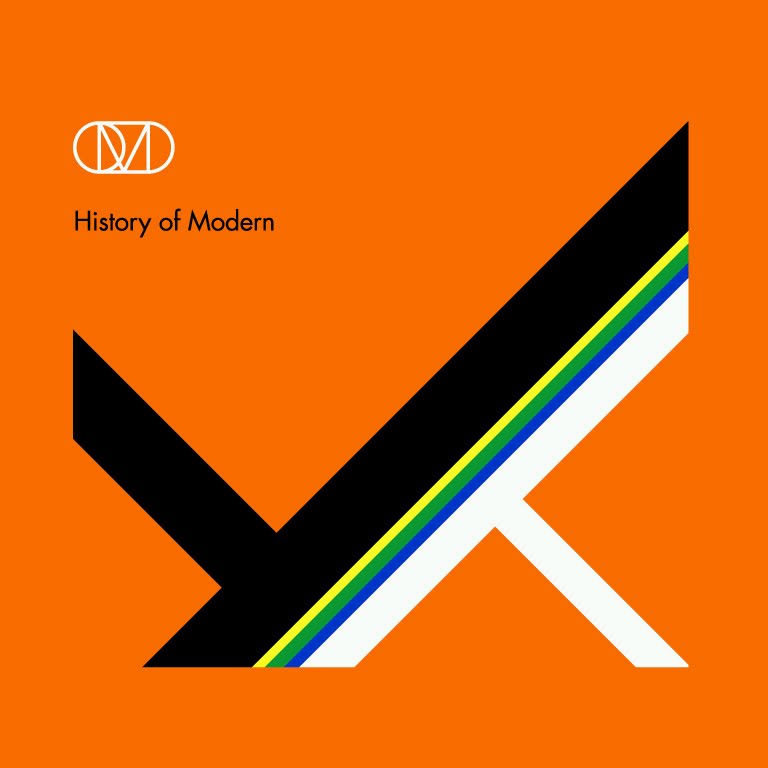
OMD - History Of Modern


The first time I ever heard OMD, they were Orchestral Manoeuvres in the Dark and the song was on the Urgh! A Music War soundtrack, and back then OMD were a bit rougher than their major claim to fame, “If You Leave.”

The press assets will try to suggest otherwise, but I don’t think of OMD as a major component in 80’s synth-pop. Save for that piece that’s permanently embedded in John Hughes nostalgia, just exactly what did OMD bring that wasn’t already on our shores?

So the fact that History of Modern is the band’s “first album in 14 years” doesn’t get me all giddy like a Yaz reunion or even a hint of a Tubeway Army album. After one listen, I can understand why the band’s label is quick to point out their longevity and their place in the history of it.

History of Modern is a note-perfect record of some kind of lost OMD album, recorded and canned slightly before the band embarked on one-hit wonder notoriety.

From the band’s logo, to the album art, to the cold digital clicks of electronic percussion, History of Modern is a gentle piece of eighties worship that’s curiously out of step with today’s players who use similar strategies for irony and/or worship.

It’s fluffy, simplistic, and harmless-just like all of the rest of the band’s foray into credible pop leanings after jumping into it with a song about nuclear arms and Margaret Thatcher’s hawkish diplomacy.

If the tones and textures are enough to conjure up nights of eyeliner and extra-hold hair gel, how about the closer “Save Me” which features none other than Aretha Franklin in her best supporting role since “Sisters Are Doing It For Themselves.” I say “supporting role” loosely as she’s the only vocalist on the track, demonstrating that the Queen of Soul is probably the only person outside of Allison Moyet and Anne Lennox that’s able to bring human depth to the cold white hands of English white dudes.

Considering this and the band’s triumphant return to form here, there are moments that may convince you of OMD’s vitality during their original run. To that, allow me to direct your attention to one their more stronger efforts was called Junk Culture-and from that standpoint, History Of Modern is merely another album that lives up to its name.

Monday, March 14, 2011

We Need To Take It Back In Time: A Good SNL Episode Reprise

It felt like old school Saturday Night Live last weekend.

For a kid in the Midwest growing up in the 70’s, television was critical in breaking new artists even before MTV told hold.

Back then, it was about those shows that you really shouldn’t have been watching, but did anyway because your parents were too exhausted to enforce their ridiculous rules that merely prolonged the inevitable.

I don’t think my parents were lazy, just clueless. This is what happens when you have kids having kids-you have no idea how to properly rear a child, particularly when your own folks were kind of shitty at child-rearing to begin with.

So you let your kids stay up and watch shit like Saturday Night Live. You take them to Animal House. And you let one of their first records be the Original Broadway Cast Recording of Hair.

After a while, you don’t pay too much attention to the tit references, choosing instead to focus on the neuances of the comedians or the influences of the musical guests.

It was a learning experiences.

If it wasn’t for S.N.L., I wouldn’t have heard Kate Bush as early as I did. Same goes for The B-52’s, Peter Tosh, Captain Beefheart and that piece of shit Leon Redbone.

Last weekend’s host was Zach Galifanakis. Before I begin, let me assure you that I am not an SNL fan-boy. Too many piss poor seasons have taught me this, so let me say that if I’m parked in bed at 10:30 on a Saturday night, I will have a gander at who is on before I plead with my wife to let me watch a rerun of Star Trek: The Next Generation of if there’s the possibility of intercourse.

I was sick as shit over the weekend, so sex wasn’t in the agenda and since I was acting like a big baby, I didn’t press my luck with Star Trek.

Saturday Night Live? Make it so!

I think Zach Galifanakis is a funny enough guy. I’m not totally bought in to him-there’s only so far that a beard and wolf-pack jokes can take me-and I wasn’t impressed the last time the dude hosted.

In fact, I did a double take on the “Info” message in the channel guy to make sure this episode wasn’t the same piece of shit I saw before.

It said “2011” and it listed some “Lisa Lisa” chick as the musical act, and if you’ve caught my intentional name dismissal, you’ll understand that things weren’t looking good for keeping the tele tuned in for SNL’s entire 90 minutes.

Galifanakis was brilliant in the opening monologue-channeling a bit of Andy Kaufman, delicately touching the balance of laughing at someone else’s expense and uncomfortable gawking. Watching Galifanakis going over page after page of written gags, I half expected someone to roll out a record player to Zach so he could mime a rendition of the Mighty Mouse theme song.


But the song was saved for Jessie J, a singer who I’d never heard before. In the first time in forever, I learned something new about an artist-albeit a pop artist, well out of my normal view of the musical landscape.

I’m still not sure who or what B.o.b. is/are, but I’m certain that it was Jessie J. who dominated the musical segment in silly attire (just like the B-52’s!) with “Price Tag.”

She was awesome.


Her debut is already a smash in her native England, and I’m sure it will post some impressive sales-at best as you can in 2011, anyway-when Who You Are is released stateside next month.

Sunday, March 13, 2011

AC/DC Announces Live DVD

Maybe it's only because I saw them during the Black Ice tour, but I'd like to check this out.

Saturday, March 12, 2011

Boys Next Door - "Shivers"

This song makes me feel like a fruity little high school boy with eyeliner. But it also reminds me how Nick Cave has been cooler than anyone you'll ever know for over three decades now. Here's a glimpse from the first couple of cool years.

Thursday, March 10, 2011

Liam Gallagher Announces Beady Eye Weak Sauce Tour Of 3 Measly Dates

To the email box, where Liam Gallagher's camp really wants you to believe that his new band Beady Eye will be just as good as Oasis was:

Beady Eye announce...their first North American tour dates. The band (Liam Gallagher, Gem Archer, Andy Bell and Chris Sharrock) will be giving fans a first live taste of their debut album, Different Gear, Still Speeding in a series of concerts beginning in Chicago on June 18th, followed by Toronto on June 20th and New York on June 23rd.

Beady Eye is currently on their sold-out debut European tour. UK daily newspaper, The Independent was at the tour kick off last week in Glasgow, Scotland and remarked that Beady Eye, "sound encouragingly refreshed.... you realise watching them that Beady Eye are in the very unique position of possessing iconic impetus while being newly unchained from the weight of their past."


And fans can head over to http://www.spin.com for an exclusive look at behind-the-scenes photos from Beady Eye's Glasgow show.

When asked how it felt to be on stage for the first time ever as Beady Eye, Liam Gallagher immediately said "Loved it.....can't wait to take it around the world." And Beady Eye will be doing just that throughout 2011. Fans can sign up at http://www.beadyeyemusic.com/ to be the first to receive the news.

Tickets for the North American dates go on sale on March 11th. Please see below for detailed ticketing information.


Beady Eye's debut album, Different Gear, Still Speeding was released by Dangerbird Records in North America on March 1st. The album features 13 brand new songs written by the band and recorded at RAK Studios in London last fall with GRAMMY Award-winning producer Steve Lillywhite (U2, Dave Matthews Band, The Smiths).

Upon reviewing Different Gear, Still Speeding, The Boston Globe stops the naysayers in their tracks and warns, "For all those who thought Liam Gallagher would be musically astray without big brother Noel, meet Beady Eye."

While Paste noted that Beady Eye "...sounds like Oasis returning to its less complicated roots, stripping back the heavily overdubbed layers of their curtain call, 2008's Dig Out Your Soul. Beady Eye aren't here to dick around-they're here to rock. And it would be a lie to say they've failed in that regard; this is an album of live, full-band rock 'n' roll energy, built on Rickenbacker crunch and Ludwig thump. There's no time for frills-Gallagher and company are making up for lost time."

Beady Eye was formed by three former members of Oasis, including enigmatic front man and lead vocalist Liam Gallagher. The multi-platinum and Grammy nominated Oasis sold over 70 million albums worldwide spanning seven studio albums awarded with six Brit awards, 15 NME awards, nine Q awards and four MTV Europe Music awards, just to name a few. Beady Eye's inaugural European Tour in March this year sold out within 30 minutes of going on sale. The band will be joined by Matt Jones on keyboards and Jeff Wootton on bass for all dates.

BEADY EYE NORTH AMERICAN TICKETING INFORMATION:

June 18 Chicago, IL @ Metro
On Sale March 11th at 10am at www.etix.com, www.metrochicago.com, Metro Box Office & Charge By Phone 773.549.4140

June 20 Toronto, ON @ The Sound Academy
On Sale March 11th at 10am at http://www.ticketmaster.ca & all Ticketmaster locations

June 23 New York, NY @ Webster Hall
On Sale March 11th at Noon at www.ticketmaster.com & Webster Hall & Mercury Lounge Box Offices & Charge By Phone 212.260.4700

Wednesday, March 9, 2011

J Mascis - Several Shades Of Why


The “why” here for many is “Why not another Dinosaur Jr.” record?”, but J. might even have answered that question in the title track of his first solo record in some time, Several Shades Of Why. It sounded like “Several shades of why I can’t go back as faster” to me when I first heard it, and I took that to mean that Mascis isn’t content with being remembered for a pair of slacker guitar masterpieces.

And those who only have those two albums (You’re Living All Over Me and Bug) are certainly missing out on some swell Mascis/Dino Jr. albums post-SST, a few nifty solo nuggets, and an “Oh, wow!” moment with his contribution to the soundtrack of Gas Food Lodging.

I actually have never seen that movie with Ione Skye, but I remember how taken I was with Mascis’ score. It provided a full realization of J.’s talents even when he wasn’t destroying the bajeezus out of a Marshall stack with overloaded tones.

I’m sure that those who aren’t familiar with that or any other of Mascis’ more subdued adventures will be just as surprised with Several Shades Of Why, a primarily acoustic album that builds a nice pillow for him to lay down his recognizably lethargic delivery.

It’s a surprisingly open effort, free of the ambiguous lyrics of records past. The subject matter here seems real and sober. As early as the first track, Mascis pointedly realizes with his affection that “pain is what we do/I got enough to make some more for you.” It’s a different, almost cruel observation, cutting a little deeper than the stoned ambivalence of his youth.

Throughout Several Shades Of Why, J. sounds tired from the weight of middle age, where weird neurotic shit that you had firmly stowed away in your inner synapses suddenly start popping up for everyone to notice.

Without that feedback to hide behind, Mascis distracts you with strings, piano, and even a flute at one point. It doesn’t sound out of place, and as soon as you’re used to those kinds of tones from a J. Mascis record, you once again begin to focus on how vulnerable he sounds.

Maybe it’s the intimate moments found throughout the record that make Shades sound as personal as they do. It certainly elevates Mascis’ slight croak into a new perspective, as does his intentional decision of leaving his guitar prowess into a limited role. Oh, the guitar work is there, it’s just not as amplified and not as showy-which pretty much means that Several Shades of Why won’t impress the faint of heart much.

But for anyone that’s been through the vicissitudes of his catalog, Several Shades of Why ranks as one of J.’s better efforts and one of his most memorable.

Tuesday, March 8, 2011

Mascis And Maureen

Thanks to Maarten-our man in Amsterdam-for pointing out this wonderfully bizarre interview with J. Mascis. The person who interviewed him was only labeled as "Maureen" and her lack of a proper introduction got me wondering: "Who the fuck is this lady?"

Watch the video and you'll see why I was curious. She clearly knows something about J. while not knowing much about his back catalog, one would surmise.

But how does she know him?

Where did they meet?

Did they get really high before this was shot?


"Pure chemistry." was how Marteen described it, and I can only agree.

The back story-according to some wonderful research by the equally curious IFC network-discovered that Maureen and J. go way, way back.

Maureen turns out to be the Mother of Sub Pop Records' Megan Jasper, who went to school with J.

Megan recalled "The first time he came to our house, he got in a screaming match with my mom. The visit ended with J standing at the front door yelling, 'YOU'RE FUCKED!' to my mom and my mom then yelling to my dad, 'JIMMY!!! DID YOU HEAR THAT? HE SAID THAT WE'RE FUCKED!'"

Obviously, it took several years in the lab before Maureen and J. developed the chemistry that Maarten is speaking of.

Wednesday, March 2, 2011

OCD Chronicles: The Oranges Band - "My Street"

I’ll admit that a decade ago, I was firmly entrenched with the belief that New York City would save rock and roll from its own girth. What I forgot was that rock and roll was bigger than N.Y.C. and if the big apple faltered, there are cities around the world ready to pick up the slack and save rock music from its own decadence.

The Strokes have fallen, for sure, but their wake was large enough that a plethora of copycat bands-both real and perceived-came on the heels of the success of Is This It. And like any band that possesses the kind of influence-again, real and perceived-there is a degree of creative worth for some of these also-rans, albeit smaller than the real thing.

Some of them were disappointments-I have The Stills’ first single if anyone wants to make an offer. But others were intriguing, like Baltimore’s The Oranges Band.

Despite having an awful name, The Oranges Band seemed to be working a unique blend of N.Y.C. rhythm guitar heroics with a touch of Manchester jangle. My perspective is based on the one e.p. that I purchased, On TV, which is about a half-dozen ok tunes and one tune of such curious charm that I listened to it again and found myself as infatuated with it as I was a decade ago.

“My Street” starts with the obligatory rhythm guitar, angular in approach and choppy in delivery. After a few spins, you’ll be whistling the parts and admiring the hidden muscle coming from the amplifier. All of this is perfectly juxtaposed against Roman Kuebler's timid delivery, which sounds a bit like Morrissey if he had to fight with Johnny Marr if he turned the amp up a bit more.

Things get really Smith-sy during the bridge, when vocalist Roman Kuebler admits like a few Moz how he'd “wish I was built like a fairy" adding the wonderfully made-up word "unawary” right afterwards, in a bit of "Accept Yourself" sass.

In less than three minutes, it’s over. But it'll stay on your arm, you little charmer as "My Street" is built for the repeat button. And in case you’re wondering if the rest of the extended play comes close to matching “My Street,” the unfortunate answer is “no.” While that opening track is good enough for me to keep On TV all these years, it wasn’t enough to prompt me to follow this promising band from Baltimore with the silly name.

They’re still at it, from what I learned, now with a different line-up but I’m not familiar enough to see if their later material is worth a trip past “My Street.”

Someone created a video of a bunch of dudes walking around N.Y.C. looking silly and they used "My Street" as their soundtrack. The sound quality is terrible and the video itself must be a real hoot to whoever knows those people.

Tuesday, March 1, 2011

Uriah Heep: Very 'Eavy Very 'Umble Very 'Old

When I entered the wonderful world of small market rock radio, I was taken by the number of off-beat songs that my station would play. There were tons of regional favorites that made their way into the playlist, songs that I had never heard before-even though I live within earshot of the station's airwaves growing up.

At the time, the station was a low-wattage, small town station that invested heavily on a huge FM tower, and a successful plead to the FCC to raise their wattage up to 50,000 watts of power. Now you understand why everytime I hear Nick Lowe's "So It Goes," I get all teary-eyed with nostalgia.

"More tower, more power!" was our stupid catchphrase that we came away with from a brainstorming session we used when we switched on the electricity to the big stick a few miles up the road.

What we didn't do was change the playlist all that much, so a lot of these regional "favorites" got to test the theory that people in Missouri and Illinois really knew who Mason Proffit was.

One of the band's for me that fit that "Wha?" category was Uriah Heep. I had no firsthand information about this band, but was assured that on one night, many years before, Uriah Heep played somewhere close by and a few people attended it.

Come to find out, Uriah Heep is still performing.

URIAH HEEP's Into the Wild scheduled
for release !

Frontiers Records has scheduled the release of URIAH HEEP's forthcoming studio album "Into the Wild" on April 15th in Europe and May 3rd in North America. Produced by Mike Paxman (Status Quo, Asia) the new album will include the following songs: Nail On The Head, I Can See You, Into The Wild, Money Talk, Trail Of Diamonds, Lost, Believe, Southern Star, I'm Ready, T-bird Angel, Kiss Of Freedom. The cover art was designed again by the renowned Greek-American artist Ioannis (LYNYRD SKYNYRD, STYX, SAGA etc). A videoclip for "Nail on the Head" is going to be shot in the coming days and will be added to the album as a special interactive tool.

The band has also recently posted a new video recording diary which can be seen following this link : http://www.youtube.com/watch?v=IHl768v25Ho. European and Australian tour dates have been announced already and can be found on the band's official websites. The first leg of the US tour was also recently announced:

6/14/2011 Atlanta GA Variety Playhouse
6/15/2011 Chattanooga TN Riverbend Festival
6/17/2011 Kettering OH Fraze Pavilion for the Performing Arts
6/18/2011 Annapolis MD Rams Head on Stage
6/19/2011 Falls Church VA State Theater
6/20/2011 Sellersville PA Sellersville
6/22/2011 New York BB King Blues Club
6/23/2011 Foxborough MA Showcase Live
6/24/2011 Jim Thorpe PA Penn's Peak
6/25/2011 Ridgefield CT Ridgefield Play House
6/27/2011 Norfolk CT Infinity Hall
8/12/2011 Three Forks MT Rocking the Rivers Festival Site
8/14/2011 Rochester MN Mayo Park

Weblinks:
www.uriah-heep.com
www.frontiers.it
www.myspace.com/frontiersrecords

Monday, February 28, 2011

What's Your Price For Flight? A Few Words On Night Ranger

The affable DJ Murphy made a public comment about finding an elusive Night Ranger album, stating that he found a copy of the band’s Dawn Patrol album, It was an admission that prompted some good-natured ribbing from yours truly because-let’s be honest-there isn’t a lot of demand for Night Ranger albums beyond the obligatory greatest hits offering.

But Murph is an unabashed collector, you see, shunning the digital realm even when a few clicks would provide him the entire Night Ranger catalog in a matter of moments, and he could do so without paying a dime.

Murph is loyal too, he will buy duplicate copies of a title if the artist means a lot to him and he will get in great detail of manufacturing information on catalog numbers and quirky subtleties of the audio quantities of certain disc pressing plants.

It’s fascinating, an I have some of his research tools to check on a few suspicions that I’ve had in my own collection.

Anyway, the Night Ranger album in question would probably cost a bit of scratch, I guess, because he found an German import version of Dawn Patrol. To me, that in itself is prime material for some good natured ribbing. I mean, who pays big time prices for a Night Ranger album, for christsakes?

I hinted at deep cut Dawn Patrol track and Murph called me out-suggesting that maybe there’s a history with me and Night Ranger.

There is.

At a different point in my life, I worked for a radio station that sponsored a week-long music event where we’d book a bunch of fair-circuit bands. On one particular night, Night Ranger was booked and yours truly was just the man to introduce them to the audience.

This was well after the band had passed their prime, “prime” being the day they released the song “Sister Christian.” The band had a platinum and another gold album after that release-but it wasn’t too long until they found themselves looking for work at county fairs and small town festivals where the stage was right across from the Tiltawhirl.

It was raining that night, with a steady pour that meant you would be soaked within seconds without a poncho. Under a thousand people showed up, including a few people from my old high school. I remember this in particular as this same person who used to refer to Night Ranger as “Night Scrounger” a few years earlier when the band’s tepid, arena rock delivery was all over Midwestern radio.

I came into their backstage area-an air conditioned trailer that held some folding chairs, a plastic folding table that held an ice-filled bucket full of beverages and the usual deli meat and cheese assortment, a stuffed couch and an area in back to shower and change.

Night Ranger lived a short life in my record collection, a victim of falling to changing tastes and a hype that painted the band more aggressively then they actually were. Understand, this was the band that featured a guitarist who turned down Ozzy-at least that was the talk on the street. Nobody turns down Ozzy, unless they have a shit hot band themselves, which is what prompted me to consider Dawn Patrol.

It reminded me of Loverboy, a lite arena rock band that chicks in my town seemed to like. And while Night Ranger had a twin-guitar attack, they didn’t need it. It was very clear with Dawn Patrol that the band was geared towards the mainstream. And until they achieved the commercial success that they wanted, they’d have to make due as a high-energy touring band, one that had plenty of gimmicks for their live set.

I sold Dawn Patrol just as quickly as I was swayed by its false promise.

So to suggest that I was in awe of their presence would not be factual. The backstage meeting was just another gig for me as it was Night Ranger, and for that, we had mutual respect.

At this point, is was only Kelly Keagy and Brad Gillis-which made my question of “So, what was Ozzy really like, Brad?” quasi-relevant. With such an insensitive question and such obvious ambivalence towards the band, Gillis could have answered in such half measures without any damage to him or the diminishing spotlight of his career.

Let’s be clear, he was getting to perform in a rainstorm in front of less than 500 people next to a smelly river in a town that held less than any number of one of their arena shows from their 80’s heyday.

But Gillis answered my question. With honesty and completeness, he spoke candidly at how intimidating it was to be the first guitarist since Randy Rhodes died that shared the stage with Ozzy. He explained that he left Night Ranger to play with Ozzy, and his intention was to always return to them instead of becoming the guy that would forever be compared to Rhodes if he stayed. He refused to speak harshly against Sharon, even after so gentle prodding from yours truly. He was a gentleman just doing a gig before the real gig was to take place.

And Keagy was too, taking the fall from the charts with humble character, hinting that he had no real illusions that they’d ever manage to crawl back up the charts again. Instead, Night Ranger was the only gig he had-the same one which began under the name Rubicon several years before they changed the name to Night Ranger. His partner, Jack Blades, was riding high with Damn Yankees-the “supergroup” with him, the dude from Styx, and Ted Nugent. He even filled everyone in on the whereabouts of their keyboard player-Alan “Fitz” Fitzgerald-who was playing keyboards for Van Halen, albeit from behind the stage.

Why kick a band when they’re down? And more to the point, how can the afternoon-drive guy from a small-town radio station have the right to poke fun of anyone who’s doing what they love?

The fact is that Night Ranger probably made more on that rainy night that I did that entire month. And unlike me, they stuck with their chosen profession, continuing under a sense of obligation, knowing that there’s someone somewhere who’s ready to hear “Sister Christian” in the flesh.

And when I grabbed the microphone on the stage, I thanked the show’s sponsors with phony enthusiasm. But when I asked the crowd to not “let the rain wash away your enthusiasm, let’s give a warm, river cities welcome to Night Ranger!” I meant it.

Saturday, February 26, 2011

Everybody Clap Your Hands

First of all, whenever you hear a grandparent or any other experienced parent say, “Kids grow up so fast.” believe it.

It’s true. As I type the fact that Ethan went to his first school dance last night, it’s not lost that it seems like only yesterday when I was wiping the shit from his ass and putting him up in the high chair for dinner.

As the English Beat once said, “Wha’ppen?”

Mom was working, so that left the job to handle both children in the confines of E’s school up to yours truly. It’s a job that I don’t recommend as any function at E’s school resembles anarchy and a feeling of panic begins to take hold the moment that you realize that you have no fucking idea where your kids have run off to.

That feeling occurred about thirty-seconds after we arrived at the school, where the activity was concentrated to the cafeteria and the gymnasium where a DJ was blaring whatever dance music kids listen to. As soon as we walked into the gym, E ran off looking for his friends, which caused Callista to immediately give chase after him.

Surprisingly, some of the other kids were doing some kind of choreographed dance in the middle of the floor while others were content to just run around and scream. Callista was very taken with the structured dance, and she began to mimic what the older girls were doing. The end result was akin to the Hokey Pokey, but with only her right leg, a move that she continued to revert back to for the rest of the night. I named the dance “The Pokey” since her version did not require her to shake it all about or to turn around. To my daughter, the act of pointing her foot out and in was what it’s all about.

Even elementary kids aren’t immune to the “Cha Cha Slide” or “Y.M.C.A.” where parents have obviously worked with their children as early as kindergarten to learn the appropriate moves. Thank God nobody seemed to have taught the “Hey! Get laid! Get fucked!” part for “Mony Mony,” but I was surprised when my own son blurted out the “Charlie Brown!” part during the “Cha Cha Slide.”

How did he learn that?

When I focused my attention on one child, the other child would inevitably run off into a sea of children to the point where I was forced to make a tactical decision. I felt that Ethan is at an age (he’ll be 8 in a few months) where he knows enough about stranger danger that he wouldn’t allow himself to leave the school or let someone try to abduct him from a school function.

Callista-who will be four in a few months-I wasn’t so sure about since she’s a social animal and will approach anyone who isn’t wearing an Incredible Hulk mask. The decision was made to let Ethan fend for himself while focusing all of my parenting attention on the little girl.

Even this proved more difficult than it sounds, as she would dance around a bit by herself and then scatter off to another part of the gymnasium. While I was close behind her, every attempt to catch up to her was interrupted by the chaos of children with no sense of manners, They would run directly in front of you, pushing any adult out of the way of their destination, oblivious to the words “Excuse me!” or to the idea of respecting authority. I began to wonder if the uprising in Libya had more structure than this sock hop.

The real chaos came at the very end of the dance, when the DJ put on Justin Beiber’s “Baby” to the delight of what sounded to be every girl in attendance. To say that I wasn’t prepared for their reaction is an understatement. I simply had never been around that many young girls whose affection towards a pop star was that intense.

I honestly can’t remember an artist to provide me with that amount of perspective when I was growing up. I was too young to comprehend David Cassidy’s popularity and was too old to really see the Leif Garrett/Shaun Cassidy/Andy Gibb success when it took hold. Then again, I don’t remember our elementary school ever having sock hops or the kind of social events that schools have today.

I think a lot of it has to do with the tremendous amount of funding cuts that public schools have today. Most of the social functions that we have at our school have an underlying theme of generating revenue. We receive more requests for money than homework for our son, and that is something that I was not prepared for. He brings home dozens of papers encouraging parents to buy Target gift cards or any other number of pre-loaded cards that the school buys to sell to parents to generate some revenue. This is in addition to book fairs, box tops, and can drives that the school has on a continual basis. And each one of them comes with an undercurrent of guilt that you’re not doing enough for the school.

The crazy thing is how very unorganized these things can be. I’ve volunteered before and have seen firsthand what happens when you let school administrators and PTA members undertake these events. The best example was when I volunteered to run the fountain drinks for a half-hour, only to notice after an hour and a half later that my scheduled relief was a no-call no-show. It wasn’t until I began looking for an organizer that they realized there was a problem.

I feel bad that schools are forced into this position-I’m the type of person that views education as an investment for this country’s future and feel that if cuts are needed in the budget, they can be found in better areas.

But I regress. Let’s get back to Bieber fever.

The volume of the girl’s scream when “Baby” came on was deafening. I noticed that even some of the girls covered their ears in pain as the person next to them squealed at the top of their lungs. I could tell that their reaction also caught the attention of my own daughter, who continued to sing the chorus to “Baby” for the rest of the night.
The DJ announced that the dance was drawing to a close, and when he declared the final song of the evening would also be a song from Justin Beiber, the girls screamed even louder. I was impressed at how the DJ strategically placed these songs at the end of the night, since the sound of any Justin Bieber song clearly turned every girl between the age of 8 through 12 into an unmanageable crazy.

It also caused their boy counterparts to head for the cafeteria to buy one more giant Pixie Stick before they closed up shop.

“I hate Justin Bieber!” I heard one boy exclaim to his mother as I waded through the crowd in an attempt to make sure that my daughter wasn’t interfering with the crowd’s escalating Bieber Fever.

When the song ended and the lights came on, my own daughter began crying that it was all over. For a moment, I was worried that she was caught up in Justin-mania until it was apparent that it was just a case of some little girl being too tired to understand why she was so upset.

And when she finally does begin to notice the cute boy stars that pop music markets to her, I’m under no illusion that they won't be just as bad as the ones that came before them.

Tuesday, February 22, 2011

Whitesnake - Slide It In


I can easily count at least a half-dozen reasons why I can’t stand Whitesnake, but let me tell you two of them as they originate from the band’s U.S. breakthrough album. Slide It In. The album has been given the “Deluxe Edition” treatment, complete with an alternate U.K. version that’s available stateside for the first time, and the packaging would prompt novices in thinking that Slide It In is indeed an album worthy enough for such attention to detail.

Thankfully, I’m old enough to remember the album when it was originally release, and that perspective provides me with enough experience to tell you that no, Slide It In is nowhere near the level of quality that’s usually designated for this kind of re-issue.

My stories will enable you to see where my criticism begins.

It starts with an ex-girlfriend. She was a young tennis player that was very impressionable with music, and I obligated her with what I’d like to believe were good album choices. Aside from a lame Aztec Camera album, she initiated her own passion for music, one that has permanently changed my perception of U2’s The Unforgettable Fire.

Her quest for music didn’t end with me. She had a girlfriend who really attached herself to everything pop-metal and this young floozy would often throw out such recommendations like Motley Crue’s Theatre of Pain or Ozzy’s Bark At The Moon. Her most passionate recommendation though, came with Whitesnake’s Slide It In.

She bought my girlfriend a cassette copy of it, and I commented on this new addition one night on her waterbed, looking for appropriate mood music.

The irony, of course, is that Slide It In is a record that screams misogyny, sexism, and every other Smell The Glove entendre that you could gather just by reading the album title. When I asked her opinion of it, she came across as a little pissed that someone she considered a friend would actually recommend this kind of music to her. We listened to the cassette a bit, laughed at all of the juvenile references to penises, vaginas and intercourse, and the entire experience left me with a bit of a soft spot for “Love Ain’t No Stranger.”

“Do you want it?” she asked after side one.

Whitesnake was big at this point, but not Tawny Kitaen big. It would take a couple of years for their irritatingly huge success based in large part to those eye-candy videos that featured some star-fucker who shacked up with one of the world’s finest Robert Plant impersonators, David Coverdale.

This is where the second example of my dismissal comes in.

One summer at the swimming pool where I worked at, a fellow lifeguard brought in a tape of a band he just discovered. He demanded that we play a sample over the loudspeakers, and in doing so, declared the band to be “the next Led Zeppelin.” The statement alone made me angry, but what really made my blood boil was the opening notes of “Gambler.”

“So, you’re comparing Whitesnake’s Slide It In with Led Zeppelin? Have you even heard a Led Zeppelin album, dude?”

Combine all of this back-story, the embarrassing cover art, and over 40 minutes of over-dramatic readings of 8th grade misogyny, you’d probably surmise that my review would be swift and brutal.

It isn’t, because Slide It In never pretends to be anything more than a farm league Led Zeppelin album to begin with. One could definitely complain that a man of David Coverdale’s lineage should have enough experience to come up come up with a line better than “I’m gonna slide it in, right to the top!” but then you’ll recall how Deep Purple’s lyrics never got confused with the Bard either.

You then begin to wonder how bright Coverdale actually is, not only in terms of stupid lyrics, but also in the manner in which he latched on to only one dimension of Robert Plant’s persona when scrounging together the musicians that became Whitesnake. He focused on Plant’s open-shirt “I’m gonna give you every inch of my love” phase, replacing it with his own “slide it in…right to the top, bay-buh” and a bunch of grunts, gasps, and other guttural enunciations.

If you’re into that Led Zeppelin-the one where they begin and end with “Whole Lotta Love” and where lemon juice serves as a fine metaphor for male ejaculate, then Whitesnake may indeed be “the new Led Zeppelin” like my dim-witted co-worker exclaimed.

But the Zeppelin plagiarism isn’t prevalent on Slide It In, which ultimately is why I can’t completely pan it and why I can’t be too worked up about its obvious shortcomings. In fact, it resembles Coverdale’s old band Deep Purple than it does Led Zeppelin. And when you’ve got all of that baggage removed from Whitesnake’s blueprint, it makes them nearly tolerable.

So what about the entire US/UK version debate? The difference in the mix is completely noticeable, but I wouldn’t go so far as to call it “rough” or “rawer.” It’s still a very mainstream album, and for anyone who thought there exists a very rough and raw edit of Slide It In, you will undoubtedly face the same level of disappointment that I found.

As much as I hate to admit it, the U.S. version turns out to be the superior mix. It’s richer, more dynamic-creating a wider sound that makes the band larger than what they really were. The band needed a break in the states, and the U.K. mix simply captured the band as what they were: a project that Coverdale cobbled together after Deep Purple imploded. The trick may have worked a bit when there wasn’t a Deep Purple filling that void, but when the classic Purple line-up ended up reuniting for Perfect Strangers, that left Whitesnake as just another also-ran.

The U.S. version corrected this, placing Slide It In alongside Deep Purple in terms of quality and scope, while packing a bit more aggression than anything on Perfect Strangers.

But before we start inflating Coverdale’s head more than it actually is, keep in mind that Perfect Strangers was a lame offering from Purple to begin with. And while Slide It In may indeed trump Coverdale’s old band reunion effort, it certainly doesn’t mean it’s good enough to justify the fancy reissue and the inclusion of the discarded, original UK mix certainly doesn’t mean that Whitesnake’s best offering deserves a second glance from those wondering what they might have missed the first time.

Monday, February 21, 2011

Whitesnake Is Now Accepting Donations For A Time Machine To Bring David Coverdale Back To 1984

From the press release as I couldn't write this shit up:

Just in time for Valentine's Day: the perfect blend of rock and romance. Whitesnake has partnered with VEVO for the world premiere of the brand new video "Love Will Set You Free." As of today, Monday, February 14th, the video can be viewed here on VEVO within the U.S. and Canada.

Directed by Devin DeHaven/Fortress Entertainment (Papa Roach, Method Man, Talib Kweli), the video was shot in Lake Tahoe, NV. "Love Will Set You Free" is the first single from the forthcoming Whitesnake album, Forevermore, due out on March 29th in North America and March 25th in Europe. The digital album is available for pre-order today via Whitesnake.com and includes an instant track download of "Love Will Set You Free." Pre-order of the album will be made available at all digital stores on February 21st.

Forevermore finds founder/singer/songwriter David Coverdale and company returning to their no-holds-barred, bluesiest, sexiest rock n' roll roots. This will be Whitesnake's 11th album and the first release via the Italian-based Frontiers Records label. Forevermore was recorded, produced and mixed by Los Bros Brutalos (Coverdale, Doug Aldrich and Michael McIntyre) at Snakebyte Studios and Grumblenott Studios & Villas in Lake Tahoe, Nevada, with additional work at Casa Dala, Sherman Oaks, CA.

About Whitesnake

Formed in 1977, and steered by the legendary David Coverdale, Whitesnake carry a rightful reputation as one of the world's leading rock n' roll bands. Coverdale's blues roots, combined with a feral sense of rockin' and rollin', have consistently shaped the 'Snake's sound along with Coverdale's love and appreciation of impeccable musicianship. Whitesnake's ascent to the very top of the rock n' roll heap was confirmed with 1987's self-titled mega-platinum album, which saw two massive Top 10 hits, two #1 singles with "Here I Go Again" and "Is This Love" and a virtual 24-hour domination of MTV around the world. Whitesnake is David Coverdale (vocals), Doug Aldrich (guitars), Reb Beach (guitars), Michael Devin (bass) and Briian Tichy (drums).


Holyfuckingshite, Coverdale looks way old. I mean, I know that he is, but I was prepared for some soft lighting, filtered lenses, anything that would ease the lines on that face.

Oh wait, there actually was that stuff! Including a bunch of silhouette shots where you can't see a goddamn thing for fear that you'd see one of those creepy creatures from Descent lurking about in one of Coverdale's crevices.

At least the stripper chick in the video looks age appropriate-like she was twenty one when "Here I Go Again" was first released.

If you watch as they're putting up the letters on the marquee, it spells "Great White Lion Snake and Puppet Show." At least they put the band name first.

The song itself? It sucks, just like you'd expect it to. Someone needs to tell that guitarist that his solo sucks almost as bad as his posing.

Finally, does Whitesnake really have their own wine? Twenty bucks says it's made out of grape Kool-Aid and that stripper's ass sweat.

Thursday, February 17, 2011

Cedar Rapids

I live in Cedar Rapids, so everyone in town is probably going to be at this movie.

You should come by and rob our homes when we're gone.

I've heard it's good. I've heard it's funny. I've heard that not a goddamn scene was filmed here.

I don't blame them. It stinks here. Literally. If you come into town from the south, you'll get a whiff of the corn syrup processing plant. Trust me, it smells worse than it sounds.

Then you'll run past some really weird chemical smell that will have you saying "Gross!"

Then you'll drive past the Quaker Oats plant, which again, sounds deceiving. You're thinking "Oats. What could smell bad with that?" but you're not understanding that it's nowhere near the delicious goodness of your apple and cinnamon oatmeal. This is like wet, milled oats soaking in some yeasty compound. It's gross. Trust me.

They call it 'The City of Five Seasons' while we call it 'The City of Five Smells.' We haven't quite recovered completely from the 2008 flood, which is a shame cause it had some character at one time.

I'd like to think we're getting back, but I'd be lying if I said we're close to a full recovery and that things are looking better. The reality is that it's frustrating, and I'd in no uncertain terms tell you to come visit.

Save your ticket for a few more years. Go see this movie instead.

Jackson Pollock's Mural

"Passion looks like a painting
Jackson Pollock’s No. 5”
-The Stone Roses
1987

There are two things that I rarely touch on this blog: art and jazz. It’s not that I don’t appreciate either-quite the contrary-it’s just that my ignorance of each would be quite obvious the moment I start blabbing on and on about it.

I know what I like and I keep it like a secret.

Hint: Miles Davis’ Miles Smilesis my favorite jazz album and I dig the chaotic splatter of Jackson Pollock’s stuff.

This brings me to the drama that’s been knocking around my neck of the woods lately: the proposed sale of Pollock’s “Mural,” the piece that has been at the University of Iowa since it was donated to the university’s art museum in 1951.

No, this isn’t the drippy color stuff of his more famous works, this is a mural created in 1943, before Jackson got all Post-War crazy with his brushes. It was this work that indeed makes “Mural” so potentially expensive if someone were to consider buying it.

This is exactly what a Republican State Representative in our state is recommending we do with the piece. Evidently, the Republican leader feels that it is the U of I’s best interest to sell “Mural” and pocket the cash to fund future art scholarships. The University, like many in our country, is facing tough resistance to increased spending and is dealing with intense scrutiny from the statehouse to get a handle on costs. There are some unique ideas being tossed around from both our elected officials and university budgeters in trying to get a handle on costs while keeping services consistent, but this idea is not one of them.

First of all, “Mural” was donated by Peggy Guggenheim. This means the donate would inevitably come with the potential that the donators could simply “donate it back” if they felt the university was only interested in the financial gain the painting provide. Never mind that any reasonable executor would later view Iowa university with a suspicious eye in the future, potentially blocking the idea of donating anything to the institution dead in its track.

But the real concern is what isn’t being reported as this story gains traction: an underlying culture of suppressing liberal institutions that many Republicans feel are creating a population of free thinkers that will render them irrelevant as our state’s population moves from the rural landscape into more urban areas.

It’s not as far-fetched as one may think, particularly if one follows the money and sees how conservatives immediately look at our three public universities when brandishing budgetary carving knives.

It gets even more suspicious when you see which of the three universities they target first. My Alma matter, the University of Northern Iowa and another, Iowa State University, doesn’t get nearly the amount of scrutiny as the U of I, mainly because they are business and agricultural institutions respectfully, both viewed as colleges that typically graduate students who would be more in line with Republican ideals. The University of Iowa, on the other hand, is the kind of liberal leaning universities that can be found in nearly every state, and the progressive nature of the students and staff makes right wing conservatives extremely nervous.

Despite the twisted logic that the Republican committee has presented in explaining why such a sale is needed, they’ve successfully brought it out of the chambers and onto to floor of the House where a vote is expected. After it travels to the Senate (where Democrats hold a slim majority) it is expected to be blocked.

Sunday, February 13, 2011

The 2011 Grammy Awards

As long as I can remember, the Grammy Awards always disappoint.

When I was a child, I would watch (keep in mind, there were very few outlets for music before MTV) the award show every year and each time I would walk away frustrated that my choice usually wasn’t selected.

I remember Debbie Boone, the Starland Vocal Band, and it always seemed that they’d give Stevie Wonder an award for something.

All of it led me to the point where I don’t put a lot of weight into what happens at the Grammy’s and I certainly don’t take it as seriously as the show would like you to believe it is. And while it’s cool to see a beneath the mainstream artist wins an award, you don’t really lose much sleep over it when they don’t.

But I was genuinely surprised when Arcade Fire won the award for Album of the Year. It clearly was an upset and virtually no one in their right mind would have thought they had a snowball’s chance in Saskatchewan of winning.

See how I made a nonsensical funny there?

There performance was good, but not good enough for “normal” people to rush out and buy The Suburbs. In fact, even Barbara Streisand wasn’t quite sure if the band was called The Suburbs and their Album of the Year was called Arcade Fire. And call her old and out of touch if you’d like, but we all know it was Kris Kristofferson that looked like he had just arrived from a 5-day camp out in his car, fueled by nothing more than Tic Tacs and distilled washer fluid.

What’s even more hilarious than the easy picking senior sect were the immediate tweets from celebrities that pondered “Arcade who?” I’m sure there is a bunch of people under the age of 18 who are asking the same thing about Rosie O’Donnell and Tawny Kitaen.

I liked Cee Lo’s get up for “Fuck Forget You” as it reminded me of Captain Fantastic era Elton appearing on the Muppet Show. I had no idea why Gwyneth Paltrow was singing with him, and then I learned that she was in some country music movie. I was surprised at her singing ability, but then I remembered that she did some movie with Huey Lewis, which completely turned me off to her singing ability.

Speaking of singing ability isn’t it time for us to completely ignore Christina Aguilera by now. Seriously. Shut the fuck up.

Bob Dylan was awful, What else is new? Move on, people.

My wife thought that the band’s that came before Dylan were silly looking and over-excited. I said it was good television, and it would create some nice record sales for them. Sure enough, both Mumford & Sons and the Avett Brothers posted some nice sales gains because of their spirited performances.

I liked Lady Gaga’s egg thing, but my kids were bummed that Katy Perry didn’t win anything. “Fireworks” is a popular favorite around our house, causing my three-year-old to burst out in Elaine Bennis fashion and my son to stoop to silly levels in an attempt to snag some of the attention away from her.

They also like Justin Bieber, but apparently, the Grammy voters don’t. I think it’s hilarious that his fans took to Tweeting nesting things about Esperanza Spalding, with some girls going as far as to deface Spalding’s Wikipedia entry.

I thought Eminem rather sucked and I was utterly convinced that the Starland Vocal Ba…er….Lady Antioxidant would win everything. They seemed so nice, clean, and white-typically great barometers of Grammy voting. I had no idea about the song, but my wife sang every word of it. Go figure.

In closing, this year’s Grammy’s was everything I expected it to be-a predicable pat on the ass to those artists who still play by the rules and manage to eek out a few record sales. Seriously, the Lady A folks went out of their way to thank their label, their managers, and to “country radio” for playing their music, acting like this was 1990 when all of those things really mattered.

They don’t anymore, and neither does the Grammy’s. It’s an irrelevant event, reduced to a Sunday night showcase of mediocrity.

And while the world is abuzz on Arcade Fire’s curious case of sudden mainstream notoriety, the rest of the Grammy’s played like any other Grammy Awards show for the past half-century.

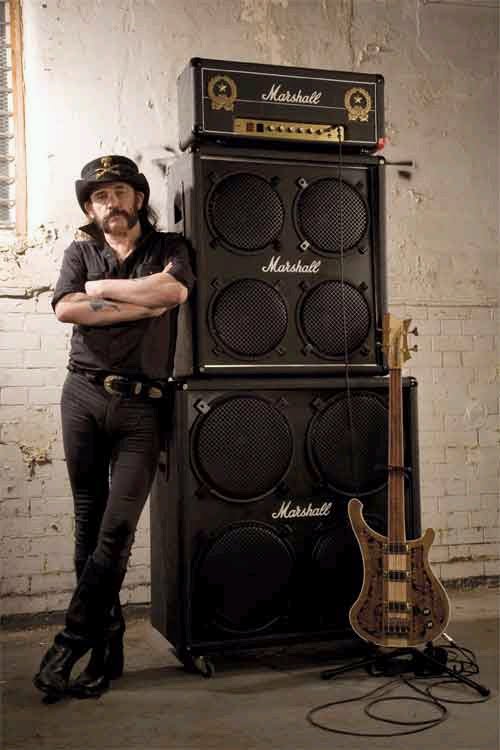
Lemmy

One of the best Motorhead stories I have ever heard came from my cousin. We had both seen Motorhead in an arena setting, and while the set was good, the barking midrange of the band wasn’t conducive to the amphitheater we saw them.

He figured that the band would really shine in a more intimate venue, and at the first opportunity, he saw them at one.

It was the House of Blues in Chicago where he ended up, a nicely appointed venue with good acoustics. To be fair, it’s also a chain-with venues in several U.S. cities, fully attentive to the bottom line of its locations with high-priced beverages and calendars that assured the maximum level of occupancy.

Motorhead filled the House of Blues in Chicago, to the point where he believes the show was oversold. He relayed a first hand account of the venue filled to the rim with fans firmly entrenched in their section of real estate and absolutely no intention of moving an inch. Most of these hard-nosed fans looked like they would straight-up shank you if you allowed yourself to enter into their personal space. It was one of the few shows he had been to where he felt the potential for personal harm.

To make matters worse, Lemmy and company were ambivalent to any notion of personal accountability. Their “free market” approach meant that they focused only on delivering the music that the roomful of ruffians had come to witness.

The music was loud-ear damaging stuff. And while my cousin watched his footing enough to avoid any physical confrontations, he was ill prepared for Motorheads aural onslaught. Having neglected to bring ear protection, he cringed during the moments where Lemmy yelled “Do you want it fucking louder!” and the soundman obliged by turning the volume up accordingly.

So maybe the strategic areas of an amphitheater is the better place, or maybe it should come as common knowledge that if you’re going to a Motorhead show, your ears will indeed bleed profusely if you dare to enter with anything below a pair of cotton balls.

The newly released documentary film Lemmy attests to this infrequently discussed Motorhead truth, but it also discusses the more noted myths of Lemmy Kilmister’s past including the reported tales of heavy speed usage, the number of women he’s bedded, and the reports that he spends a lot of his waking hours playing video trivia at the Rainbow.

To these factoids, Lemmy pooh-poohs the reports of how many women he’s slept with, cautions that he’s known many people who have died from excessive drug use, and admits that his longevity is out of necessity instead of actual talent.

Because when you’re a vital member of the evolution of rock music, your limitations can actually be your strength, and for Lemmy he wanted people to experience what it might sound like if you used a pair of Triumph exhaust pipes as headphones while someone throttles the engine.

For Lemmy, his heroes are the Founding Fathers of rock: Elvis, Little Richard, Jerry Lee Lewis, etc. You can tell in his appearance how he relates to their generationally divisive music and you can tell in his performance how he viewed the strength of their output. To match wits them, he knew he had to be louder and faster than their material to appear as worthy enough to respect their legacy. and the rest of those first generation rockers that he identifies with. One could argue that those members were blessed with more God given talent than Lemmy, but they’d also have to accept that Lemmy represents a nearly as vital place directly behind those Founding Fathers.

In that section is Motorhead’s ambiguous blend of punk and metal. The union gave birth to an unruly bastard, an offspring that had no time to tease its hair or compose a power ballad. There seemed to be one speed to Motorhead-no pun intended-and they had to wait until payday before they could afford to repair the breaks on that bad motherfucker.

Lemmy does a fine job of chronicling the obligatory time line of his life, and viewers get a nice overview of his musical output from Hawkwind and beyond.

There are moments in his history that seem to only get a quick glance before moving on; I can’t for the life of me remember if the film discussed much about his work with Wendy O Williams or Girlschool. That’s a shame, as I don’t know much about those periods and his involvement with Girlschools’s Kelly Johnson.

Unfortunately, both of those high profile relationships don’t provide another side of the story; both women have passed away and there’s no archival footage presented. Instead, there’s a parade of talking heads, from hilarious recollections from The Damned to the incessant yapping and nutswinging of the ever-present Dave Grohl. He attempts to say something profound about how Lemmy is more of the real deal than someone like Keith Richards-implying that there is some unwritten rock and roll code that somehow negates integrity with financial success. What makes the entire argument a bunch of hot air is Grohl’s own output of palatable rock that pockets his own wallet.

Meanwhile, Lemmy continues to live in a cramped apartment, stuffed to the ceiling with shit and littered with trash and cigarette butts. I’d be willing to bet that anyone reading this-including Dave Grohl-that if they were presented with either the lifestyle of Keith Richards or Lemmy Kilmister, it would be a landslide for Keef.

We all know that Lemmy is a badass without Grohl or anyone else’s comments, and most of them on Lemmy are merely fluffy praise and little meaningful antidotes.

The film does dig more into the human element of Kilmister, at least as much as he’ll allow. He brushes off any chance to speak about the mother of his son with recollections of how she lost her virginity to John Lennon. There is an acknowledgement of another child who he’s never met, but you don’t know if his ambivalence towards that prospect as an example of his lack of emotional connection or an eerie comparison to a similar path that his own father took when Lemmy was two years old.

The only moment of real human levity comes when the filmmaker asks Lemmy what item in his apartment is the most valuable.

“My son.” He says without hesitation.

His son is seated right next to him when he says it, but you get the sense that Lemmy didn’t just come up with the response for the camera. His son wasn’t prepared for the answer either; you can tell that he’s visibly affected with the response

While these brief moments of emotional content are nice, you get the sense of impending doom with Lemmy, like the subject matter is drawing closer to a close either by choice or by some kind of health surprise.

Yes, much is made about Lemmy’s resilience to controlled substance history and his penchant for a bottle of Jack a day, but he certainly doesn’t seem as mentally sharp as his frequent comparison, Keith Richards.

It’s more than the slurring of words or continual tales of rock nostalgia. The bounce is gone from his movement-the chance of certain danger eliminate. His Los Angeles residency is the retirement village he was able to afford and the parade of visitors and fans his nursing staff.

It’s a bit sad, but it’s reassuring to know that he’s safe and, yes, when that time comes, Lemmy Kilminster will be missed.

Lemmy will be used as a vital part of that eulogy, of course, but it would have been better served with more detailed elements of his musical history to ensure that those who watch it will immediately want to seek out his recorded work as soon as the credits roll.

Friday, February 11, 2011

Toy Division Performs Transmission

Here's an awesome clip of a Playmobil stop-motion Joy Division doing "Transmission" on John Peel's show back in '79. I love the attention to detail: Hooky's beard, Ian's spastic shuffle and the full-on whirlwind arms of Stephen Morris behind the kit.

Thursday, February 10, 2011

Singles 45's and Under: Carole King - "Jazzman"

Carole King’s Tapestry was one of those albums that got a lot of airplay in our home during the early 70’s. It was one of those records that I wasn’t allowed to monkey around with like some others that I have documented on these pages.

To make up for this, my parents bought me a copy of the single “It’s Too Late,” which I’d play (the flip was “I Feel The Earth Move”) incessantly. Sometimes, I’d bring the copy of Tapestry up to my room- adhering to the request to not take the record out of the sleeve-and just stare at the cover art.

It was strange that my parents even had the record. They had addressed the problem of my destructive hands by switching to the 8-Track format, placing the player and tape cartridges up beyond my reach. I think back at all of the awesome albums they had on 8-Track and feel bad that they were presented on such a shitty format.

I’d play “It’s Too Late” and look at the cover of Tapestry, studying the shot of a barefoot Carole sitting by the window with her cat. She looked so exotic to me, a result of my Wonder bread community where Jewish may as well be Chinese. So to me, Carole King looked like some unattainable young woman from the city who had no qualms telling an old boyfriend “Something inside has died, and I can’t hide it, I just can’t fake it.”

I began to develop a crush on Carole King.

She also did Really Rosie around the same time, which secured another bond-but I was ready for the proper follow-up to Tapestry, not some greasy kid stuff.

Then, she came out with “Jazzman.”

I bought the copy you see in the picture, mainly because that was all I could afford on my measly allowance, and wished I had a bigger picture of Carole to gaze upon. I was taken by her eyes-a vibrant set of blue-but wished I could see more of her features below the neck. There was absolutely nothing sexual about my infatuation-I was much too young to grasp that kind of desire-but instead it centered around an ideal of what I thought a “cool” woman should be like.

It’s something that I still fight with today as my collection of Kate Bush and Cat Power records will attest to. Remember the scene in High Fidelity where they talk about dating an artist, longing for the day that their blurry image can be seen In the back cover shot. That’s me with Kate, Chan, and at one point, Carole King.

I told the story of my crush to one other person, and was immediately met with a look of “Are you serious? Carole King?!” Beauty does indeed lie in the eyes, and I’ll admit that my taste in women has changed since my pre-pubescent years.

My parents bought me a portable cassette player that same year-another entry in their long line of obsolete music machines. The first cassette? A copy of Carole King’s Wrap Around Joy, the album that “Jazzman” is featured on.

The cassette player would later eat the recorded music, but the bigger complaint was how the cover art to that tape was even smaller than the sleeve to my single.

No worries: another Jewish girl from New York would soon take Carole’s place and it is almost as embarrassing. This time it was my Mom’s copy of a Bette Midler album, featuring the buxom redhead with cleavage revealed-and it came at a time when things like that mattered more than the casual cool pose that Carole offered a few years prior.