Showing posts with label Jimi Hendrix. Show all posts

Wednesday, October 23, 2013

Jimi Hendrix Experience - Are You Experienced (UK Mono Version)

For some reason, the packaging, the running order, the difference between the UK and US version of the Jimi Hendrix Experience’s debut album Are You Experienced has always intrigued me. So when Experience Hendrix announced the reissue of Jimi’s first trio of releases on vinyl-including the UK version of AYE-my attention was laser-focused.

I have no historical connection with the mono versions of Hendrix’ first two releases. I was raised on the running-order of the Reprise stereo versions of both, themselves reissues of the awesome old steamboat logo that Reprise used to have. I ruined perfectly good Animals records from that period, and I remember noting the big old boat version and I scribbled my name over the label.

So thank God it wasn’t a Hendrix original pressing, I guess.

And for some stupid reason, there was a time during the 80’s when I was so fixated on replacing every one of my vinyl titles on cd that I was sell them for pennies-on-the-dollar just to have it on a shiny aluminum disc.

This includes all of my vinyl of Jimi Hendrix records.

Now, none of mine were rare titles. Like I mentioned, they were all (and by “all,” I’m only talking about the first three records) reissues of Reprise titles, well before everything got sold to someone else and that someone else is now Sony records, I guess.

Whatever.

Point in that I sold all of that shit, and then one day I’m playing my records, like actual vinyl, and I go “Man, some Hendrix would really hit the spot!” and go over to my stack of wax and look for Jimi.

And it’s not there.
Not the badassed gatefold copy of Axis with all of its lysergic glory. Not the Columbia House edition of Electric Ladyland and not even the U.S. stereo version of Are You Experienced?

Obviously, I had to correct that problem, toot suite.

This is about the time of the Experience Hendrix reissues, of which I read about, became convinced of the item’s quality, and selected the UK mono version of AYE just to mix it up and listen to it again with fresh ears.

Let me tell you that the results floored me. Not in the manner in which you may be thinking, but we’ll get to that in a moment.

First of all, the packaging contains a reproduction of the UK cover, just standard issue quality. Mine was numbered “1697”, of how many more, I haven’t researched.

The inner sleeve is a pedestrian black and white colored sleeve, one side featuring a roll of Hendrix performing live, while the other touts the extensive manner in which Bernie Grundman mastered the release, using state of the art analog mechanics. It’s an interesting read, but I have no idea what the shit means.

What I do know is that the vinyl is thick. None more black. The fuckers at Sony replaced the more historically accurate Polydor label with a new Experienced Hendrix one.

At this point, I don’t care. Particularly after I learned that Grundman retrofitted a machine with old tubes to make it sound “accurate,” so, you know, I’m stoked about hearing AYE “as it was meant to be heard” or “the way Jimi intended it” or “You just dropped $17 for an album to once owned, so get to playing it, dummy!”

Right out of the gate, let me say that leading off the American version was “Purple Haze,” a cut that doesn’t appear on the UK version of AYE, because it was basically slopped together at the beginning of the Summer of 1967. America had to wait for its version, and when it came, it was primarily the stereo version, and it included the aforementioned “Purple Haze” and the stunning “Wind Cries Mary.” If you’re new to Hendrix, this is the album where you need to start and this is the version you need to start with. Even after hearing the UK version, the US stereo version is a vastly superior title and it stands as one of the greatest debuts of all time.

The UK version of AYE starts with “Foxy Lady,” still, a pretty swinging opener for May of ’67, and it begins a very curious visit to an old friend. Not only is the fact that “Foxy Lady” is starting things off, it’s doing so in a very muddy fashion. This is the worst mix of this song I have ever heard.

But I press on.

The UK version includes “Red House” and “Remember,” both of which give our compatriots over there a much more blues presence over the record. With England already witnessing a blue resurgence thanks to Clapton’s work with John Mayall to the Stones earlier catalog, Are You Experienced takes on a more decidedly English feel than its American counterpart, which now feels like a much more heavy rock record compared to this version.

Overall, AYE UK achieves exactly what I was hoping for. It transported me in front of a shitty monophonic record player, hearing the album as close as I could get to the exact moment when it was first issued. It’s mindblowing and it still stacks up to nearly everything that was released in the creative-filled year of 1967.

The monorail performance is a flat-eq’d barker with Hendrix’s guitar front and center. There’s occasionally a bit more reverb in some of the mix and a ton of gain present during the dynamic performances. I’m guessing this is a result of Grundman’s back to mono ethos in the mastering process. Whatever it is, it is some weird shit. It made me light some incense and feel a little creeped out, gingerly contemplating my brief crack in the time continuum.

There is a bunch of other strange sounds from differences in the mix that occur, particularly in “Third Stone From The Sun,” which easily becomes my favorite moment in this new old mix. Again, Jimi’s guitar is way up in the mix, making all of the sound effect moments and slow-speed space transmissions even more eerie. Then Jimi comes in and asks if he can “land my kinky machine” and everything’s cool again.

Except for “Fire,” which nearly had me believing that I had secured an inferior pressing of AYE. Right after Jimi’s solo, the audio suddenly drops out and sounds out of phase, if that makes any sense. It is remarkably different, like it’s a different source for the material. It’s a jolt to the listener and something that I’d think they’d put a disclaimer of if it were a regular occurrence, like The Who did on Live At Leeds with its warning of the record label of “Crackling noises o.k. – Do not correct.”

I visit the Steve Hoffman forums-the go to place for everything geek record information-and sure as shit, the issue of the dropout in “Fire” to the crappy mix of “Foxy Lady,” are all addressed and they are attributed to the defects of a hastily put together recording and mixing session are the root cause of all of these sonic issues.

The reality was that most listeners heard their records on blue collar systems, and little attention was paid to sonic perfection by pop/rock engineers as a result. There’s a natural tendency for such system limitations to mask the imperfections, combined with the reality of the limits that those primitive recording consoles had when recording a dynamic artist like Hendrix, and you get a lot of noticeable flaws on aurally visible, even today’s mid-range systems.


Given how much an original UK mono pressing of Are You Experienced is going for, and considering how there is (supposedly) no difference between the mix of it and the new Experience Hendrix reissue is, the new release is a bargain. It’s still great enough to blow minds, even in a flawed monorail mix of what is-particularly in its American sequenced stereo counterpart-one of the greatest debut albums in rock history.

Sunday, November 27, 2011

If 6 Was 9 Then Today Jimi Turns 69

It’s Jimi Hendrix’s birthday today. And while 70th birthday sounds a lot more meaningful than 69, Jimi did ponder what if six turned out to be nine and he recently made the headlines again thanks to a meaningless “Best Guitarist Ever” poll, one in which they righted some glaring oversights in the last one.

But they left the #1 spot the same because there really is no argument who the greatest guitar player in the world is.

You can try and find Hendrix’s adversaries, but you won’t be able to demonstrate that any one of them changed the face of their instrument in the way Hendrix did.

Period.

People will also correctly point out that all of this happened in less than a half-decade, but they often forget that he did nothing but work on his craft for the other half of it. The dude played, rehearsed and toured to be good enough to get your attention for a few moments of your time away from the headliner you came to see.

All of those tales are overlooked once you learn about the night Hendrix slept with his guitar.

I have to believe there are people out there, young, aspiring guitarist who hear that story and think of it as some kind of shortcut to greatness. That maybe they don’t hear enough of the work Hendrix put into his playing, focusing instead on those often repeated stories of the drive to greatness-not the unromantic tales of hard work.

Will there ever be a guitarist as good as Hendrix? Honestly, they’re probably has been a better one already. But Hendrix’s ranking is more than just the notes he played, it’s how he transcended the instrument itself, turning it into the focal point of the performance and securing its role within rock and roll’s blueprint.

Monday, September 20, 2010

Jimi Hendrix - Live Isle Of Wight '70


It was over forty years ago when Jimi Hendrix performed at the Isle of Wight festival, a performance that would prove to be his final one in England.

The obligatory album released after Hendrix had passed suddenly became one of my favorites about fifteen years ago. There’s no explanation for it other than I needed to learn a new story about Hendrix and his performance at the Isle of Wight must have taught me something about Jimi that I didn’t know.

I’m talking about the original Polydor release of Isle of Wight. I don’t own Blue Wild Angel; it’s a victim of the pricey import of the original release that prevented me from purchasing the expanded re-issue.

And, to be quite honest, it isn’t very good either. Oh sure, even the most mediocre of Hendrix posthumous releases will have a few moments of real fire taking place-but this live document shows Hendrix sounding worn out throughout most of the set.

I bring this up because I got the album years ago when trying to piece a complete story of Jimi together in my head. I was trying to piece the narrative together from his performance.

I know, it makes no sense whatsoever, but at that time I was at a point in my life where I was approaching the age of when Hendrix passed away-and I was living at my parent’s home in my old bedroom, a former place of security that had since been remodeled.

Because what parent thinks their child will be back home after they’ve moved out of the nest for good.

I did. And it was embarrassing.

My funk was filled with interrogations from my mother about the number of resumes I had filled out.

Each day ended with a few drags of a stash that were blown through a tube stuffed with Bounce dryer sheets, concealing the smell and the reality of my surroundings.

It helped me sleep, but it was two albums that helped spin the soundtrack to my insomnia.

Live Isle of Wight ’70 seems the perfect song for that period it my life. It’s slow, unfocused, and distracted. Hendrix’s performance throughout it is sloppy and unspirited. Mitch Mitchell’s performance is repetitively bombastic, like a minor-league Keith Moon who didn’t bother to hear how Moonie could at least keep time in all of that percussive chaos.

Even the stable and reliable Billy Cox sounds like he’d rather be anywhere other than on the stage playing in front of a festival crowd.

And then there’s Jimi, who’s lackluster delivery is complete with flubbed lines and exhausted phrasing. He sounds tired, and it reaches over into his guitar playing too. For a man that sailed so high with his guitar playing, it’s sad to hear him sink so low shortly before his death.

Send My Love To Linda

There’s a reason why I continually buy books on bands, read liner notes, or watch endless Behind The Music type of documentaries about artists where I already know more things than most people would even care about: I might learn something new.

A good example of this is with Pink Floyd. I’ve heard the story of Floyd so many times that I can even name the band that Syd Barrett briefly fronted in the early 70’s before realizing after one performance that his heart really wasn’t in it anymore.

Despite all of this worthless knowledge, I continue to seek out more-a thirst for that juicy bit of trivial information that makes the hair on the back of my neck stand up. That excitement at feeling you’ve learned something new about an artist-a factoid that gives you a one-up on your equally geeky competitor.

Your peer in this rock and roll fanaticism.

Take Jimi Hendrix.

Just a few days ago, I “wowed” my old lady with the bitchin’ tale of “The Night That Jimi Hendrix Choked On His Own Vomit.” It’s not really “bitchin’,” I mean the guy who essentially designed the blueprint for rock and roll guitar playing ends up dying at the end of the story. But it’s a story of the final day of Hendrix and the weird little plot twists and turns that unfolded after he died.

Here’s the Twitter version:

Hendrix gets loaded, chokes on puke. Turns blue. Girlfriend freaks. Calls Eric Burdon. Burdon yells “Call the doctor!” Too much time passes. Jimi Dies. Chick later shacks up with Uli Jon Roth. Chick kills herself twenty years later from guilt over contributing to Jimi’s death.

Actually, I think that’s more than what Twitter would allow, but you get the idea.

I think the word that the kids would use to describe my wife’s reaction to the story above is “Meh.” Perhaps you don’t really care about the life of Jimi Hendrix or get the six degrees of Kevin Bacon in that whole piece, in which case the novelty of it is completely oblivious to you.

Or better still, you have a better story about Jimi-one that can put mine to shame-and you learned in through on-going research, a devotion that would come to fruition at the very moment when you smacked me upside my rock and roll loving head with an even better narrative.

John Ridley is the man who would smacked me upside my rock and roll head last week.

Ridley’s piece about Hendrix on NPR’s All Things Considered is a dandy; a compelling tidbit of Jimi that is so crucial to the man’s rise to fame that it embarrasses me that I did not know about it earlier.

Read (or listen) about the story here, but better yet, listen to the song.

For the first minute of the story, I thought it was going to be about how this new unreleased Jimi Hendrix track sounded like a Nirvana song that most of you are quite familiar with.

But it isn’t.

Instead, it’s an amazing tale of how a caring woman planted some pretty important seeds into Jimi’s head which set a path in motion where he finally found the success and attention that he deserved.

If you can tolerate the ridiculous Guitar Hero video that accompanies it, someone has graciously uploaded this incredible unreleased track up to You Tube.

Why this thing hasn’t been made available yet is beyond me.

There’s also a very brief take with vocals out there too, but this full instrumental version is just incredible.

Tuesday, September 7, 2010

Obama Quotes Jimi Hendrix

Or something like that. Obama mentions that the right talks about him like a dog, which just happens to be a line from "Stone Free."
Which brings up this badass clip from early Jimi.

Thursday, July 1, 2010

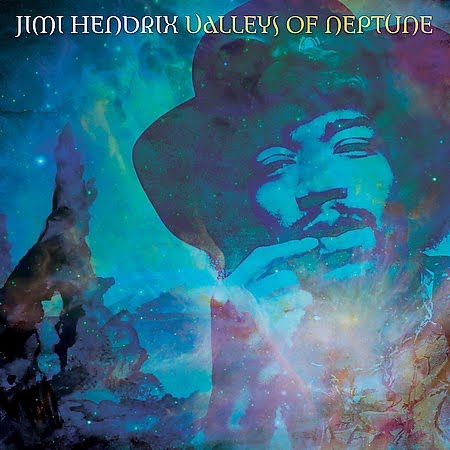
Jimi Hendrix - Valleys Of Neptune


Let’s be honest, we’re gaining nothing new from a “new” Jimi Hendrix record. At this point, we are only able to piece a day-by-day audio picture of the man, cobbled together occasionally in some semblance of a record. There’s a part of me thinks that the man, himself a perfectionist who would record endless takes of a track until he found the right one, would be rolling in his grave at the thought of us still releasing albums from his audio demos, rehearsals, and alternate takes. He died too young to give a clear indication of where he wanted to go next, and judging from what I’ve read, his passing came during a time when different factions in his life were pressuring him to do more with his notoriety. More shows. More money. More responsibility. And all the man really wanted to do was to play his guitar.

I understand why we’re still fascinated by Hendrix because I’m caught up in it as well. The first rock image on my wall was a framed picture of a Jimi Hendrix drawing that one of my Dad’s students gave him after he transferred from their high school to another across the state. My Dad told me the story of Jimi Hendrix-how he could play behind his back and with his teeth and that he died too young, causing some of his students to feel sad-and he let me hang up his gift in my room.

We didn’t have any religious artifacts in my house growing up, so I guess you could call Jimi my first deity that I ever knew.

In kindergarten, we were given a chance to bring a record from home for music time. I brought a “Back To Back Hits” single that Reprise records released featuring “Purple Haze” on one side and “Foxy Lady” on the other. I asked the teacher to play “Foxy Lady” because I thought that Jimi would do a better job at letting Kris Stevenson know that I thought she was foxy looking.

Then she lost her front two teeth later on in the school year and she wasn’t quite so good looking then.

In high school, I almost got into a fight with a guy when he said that Randy Rhoads was the greatest guitar player of all time, a claim that he perpetuated shortly after Rhodes died. Rhoads is a fine guitar player, but what the dipshit couldn’t understand was that there would be no Randy Rhodes without Jimi Hendrix.
Instead of punching him, I told him to check out Jimi’s solo on “Red House” and tell me what he thought. He never brought up the subject again.

The point is all of this made Hendrix a part of me in some way. He asked if we were experienced, but to me, Jimi was a part of my collective experience while I grew up. He was teaching me something and indeed, there’s a lot to learn in the man’s brief catalog during his lifetime.

But there’s very little to learn from his posthumous studio records. For the curious, there are hints of where he may have taken his career-a direction best detailed with the first posthumous release Cry Of Love. But that album is no longer available; instead it’s replaced with the bloated First Rays Of The New Rising Sun, a supposedly more accurate record as it attempts to recreate the (double) album that Hendrix was trying to finish after Electric Ladyland. And since it was released under the direction of two of the album’s original participants-drummer Mitch Mitchell and producer Eddie Kramer-New Rising Sun does remain as Hendrix’s most legitimate posthumous offering.

Valleys Of Neptune is primarily pulled from recording sessions during this same time period. None of the material was intended (as far as we know, anyway) for any proper album-so the sixty-minute collection is just that: a random collection of material from February 1969 to September of that same year. There is one track (“Mr. Bad Luck”) from a 1967 session, and the difference between that track and the others is sonically obvious.

The 1969 sessions are notable because they feature two distinct rhythm sections. The early ’69 sessions feature original Experience member Noel Redding on bass guitar. The bassist and Jimi had clashed a bit during the Ladyland sessions and those creative differences rose again during the recording sessions for Neptune. By the Spring, he was gone, devoting his time (as a guitarist) to his band Fat Mattress who released their debut album later in the fall.

Enter Jimi’s old friend Billy Cox who brings a distinctive and more effective role to the low end of the band. Cox can be heard on Valleys Of Neptune’s first three tracks and they are by far the album’s tightest moments.

Hendrix himself delivers some wonderfully impressive soloing, particularly during “Hear My Train A Comin’” and “Ships Passing Through The Night” with a shit hot version of “Red House” that inexplicably fades out after Jimi delivers an amp destroying solo.

Mitchell and Redding slop through their parts throughout the album with Mitch missing fills and hesitating at inappropriate times while Noel is content with doing repetitive runs with little effort or character. Their performances remind you that Valleys Of Neptune is comprised of leftovers. They’re hardly a discovery, but just a focal point of the latest batch of reissues and commercial tie-ins with the obligatory Rock Band offering.

Yes, Valleys Of Neptune is the debut album of the Hendrix estate’s new executor, stepsister Janie Hendrix. One could easily draw a cynical view of her role and of this release in general, but considering how his legacy was the subject of such morally questionable releases (Crash Landing, Voodoo Soup, Midnight Lightning) and under the direction of a morally deficient executive producer (Alan Douglas), it’s become clear that Jimi’s catalog is best represented under the watchful eye of a family member. For over twenty years, Douglas desecrated the Hendrix name and he failed to understand that to build the Hendrix brand (and yes, that is exactly what it turned into when he passed), you must make sure there is consistency with each new product. Through the effort of Jimi’s late father Al and now with stepsister Janie now at the helm, we have seen his catalog treated with respect and his unreleased material compiled with careful consideration.

That is true with Valleys Of Neptune.

Even with its faults, it doesn’t diminish Hendrix’ allure and it won’t turn long-standing fans away. Sure, the obsessive completists will bitch about technicalities and song choices, but they’d do that anyway, regardless of what is released.

For them, the money shot is the last two songs, “Lullaby For The Summer” and “Crying Blue Rain,” a pair of intriguing instrumentals that are rare enough to make those completists smile and those long-standing researchers like me consider “I wonder where he would have taken this?”

There are rumors that hours of additional material remain in the vaults and that we will probably continue to see additional releases authorized. Prior to Valleys Of Neptune, I would have been concerned with that claim. And while I don’t think that such Hendrix releases will be able to move me like Cry Of Love did or even a good live document would, I’m at least more comfortable with the idea. They’ve done a good job of selecting material where the arrangements are similar and from the same recording period (aside from “Mr. Bad Luck,” which is good, but just out of place here) and I’m finding myself coming back to Valleys Of Neptune more than I expected.

What the album provides is a glimpse of Hendrix work ethic during the first half of 1969, a time when his recording patterns intensified and his relationship with Noel Redding strained as a result. Regardless of any strife he may have been facing personally, Neptune shows ability to put it behind him as soon as the guitar strap went on.

While Jimi’s original quartet of albums released during his lifetime are still the only thing you’ll need to get you to cover your walls with Hendrix posters, Valleys Of Neptune is good enough to ensure that you’ll be able to keep the memorabilia hanging proudly.

This review originally appeared in Glorious Noise.

Monday, April 5, 2010

Apples To Apples

All of those commentators are right: the cd is dead and music files dwarf any form of music format. It’s been so long since I bought a cd that I was actually surprised when I drove home and saw a box full of cds sitting in front of my door.
I couldn’t wait to emerse myself in them.
Notsomuch for the music, but for the content. You see, one of the was one of the new Hendrix reissues (I know, I know) that boasts better fidelity and a dvd. To that point, the dvd is a joke-it only runs about 15 minutes-but you do get to see a salivating Eddie Kramer break down key tracks and I dig shit like that.
I love watching people like him, George Martin, Roy Thomas Baker, whoever, sitting in front of a big console and isolating tracks.
Who wouldn’t give a toe to be that guy?
For the brief running time, I suppose it is pretty interesting-and considering what I paid for the disc, I’d even suggest that it was worth the price of admission.
Especially considering it would have been the same price to download the file from iTunes or Amazon.
The beauty of those services is how immediate it is and how it’s now becoming the only option available for some of those out-of-print titles. I recently did a review of The Dream Syndicate’s Medicine Show for Glorious Noise after remembering how great that album was. I could have shelled over $50 for an original copy of the out-of-print cd of that title, half of that for the vinyl version, or gone cheaper for a cassette copy that would surely rub the oxide off the moment I began to play it on my never-used NAD cassette deck.
Or I could have-and I did-download the entire album and the companion live e.p. for under $10. In just a few moments on a Sunday night at 10:30, I was listening to a relic from my past.
But those discs grabbed my attention. Sure, I immediately uploaded them to my iPod (in fact, the last time I tried to use my NAD cd player, it skipped, jumped, and was more hassle than it was worth) but then I opened up the disc and read the liner notes just like old times.
When you make a price point that’s comparable to a download, there’s a chance that I’ll choose the cd. Unless it’s a new artist, in which case, I’m gonna stay with the file until I’m sure that I want a permanent, hard copy. Full disclosure, I get a lot of stuff for free to review and have the luxury of deleting it after I’m done with it, but even then there’s another option. You’ll often be granted access to an audio stream, which I use a lot and then compose the review on the fly. After two or three spins, I’ll determine if the release is hard drive worthy and then download the file. If it meets an even higher criteria, there’s a chance that I may buy the actual disc of it.
Deerhunter, Animal Collective, and Love Is All seem to be sure things.
Classic albums and others from my past also take priority-but even then, it’s not a sure thing. If you’re still going to jack me for $15 a disc, I’m going to look for a free copy.
Haven’t you heard? We’re tired of getting ripped off and we know you’re making a nice profit on every cd!
At the same time, it’s hilarious that only NOW has Universal Music gotten the hint and they're offering most of their catalog for $10.
You’re a little late, hoss. That would have been huge news a decade ago when it counted.
The labels need to fess up and start following Apple’s lead. I know I recently poked fun at their hissy fit with Amazon, but let’s be honest-there’s really nobody that can touch them in terms of technology and developing products that appeal to our most human emotions.
Like music.
If they can bring the remaining two things that still have me buying cds-album art and lossless audio-then I’ll be stopping my cd purchases for good. It's practically there right now (this was the first cd purchase for me in 2010).
And because Jobs is a music fan like you and I, there’s a good chance that the last bastion of physical music appeal is coming soon. The iPad sounds and looks awesome. It's the kind of device that would enable you to listen to music and look at the album art at the same time. Or watch the video for the lead track. Or watch the producer isolate tracks on the "making of" documentary that came with your album purchase. Or maybe it would even let you isolate the tracks and do it yourself.
Hell, I should copyright that idea for an iPad application!
And now that Apple has bought EMI records (acquiring the Beatles’ catalog in the process), they be able to press forward with those ideas-starting with rock music’s most famous band.
Sure, other labels can stick to their guns and try to force up music prices again, but with Apple as a loss leader with a nice catalog of artists to promote, those labels are facing a losing battle and a diminishing market share.
There is very little to not convince me that Steve Jobs is working on a completely different level than most other CEOs and that his vision is at a point where I’d be a fool not to put Apple ahead of any other copy when it comes to computers, phones, or any other electronic device.
Plus, he's a music fan on top of it all.
I can't say the same thing about Bill Gates.

Wednesday, November 12, 2008

R.I.P. Mitch Mitchell

Mitch Mitchell died today. All members of the Experience have passed. Even Buddy Miles is gone, so most of the Band Of Gypsies are gone too. Stay safe, Billy Cox.
The stories are that Mitchell was the only real drummer for Hendrix. The only one that actually challenged him musically. Miles was more of a powerful player, more groove oriented, but Mitchell came from a jazz background and gave Hendrix the freedom to explore. Thanks to some shitty business dealings, Mitchell was close to broke in the seventies and was forced to part with a Hendrix guitar just to make ends meet. He died on the road today, in Portland, apparently of natural causes.
Here’s hoping they’re all doing a killer version of “Red House” in Heaven tonight.

Thursday, February 28, 2008

Miles Away

I never knew that Buddy Miles was a member of the California Raisins. I learned this immediately after I learned that Buddy had passed away today while listening to N.P.R. on yet another snow covered commute home from work.
He was only sixty, which means that he was barely twenty-one when he joined Hendrix’s Band of Gypsys, which means that he was twenty when he played in Electric Flag with Mike Bloomfield and that puts him at a mere nineteen during his tenure with Wilson Pickett.
Buddy Miles was the kind of dude that rub shoulders with more cool people before the age of twenty-five than you or I ever hope to meet in our entire lifetime.
There was a time when I would have pegged Miles as Hendrix’s best drummer ever, particularly after hearing “Machine Gun,” perhaps my favorite Jimi song. Mitch Mitchell is a fine, jazzy drummer who keeps ups and keeps busy with the greatest guitar player ever, but Buddy fucking nails “Machine Gun” to the point where you know that any other drummer would just take away from the song’s power.
Ultimately, I understand why Miles only worked on one album and that’s the same reason why Buddy only managed to work with Bloomfield on one album.
And Carlos Santana.
And John McLaughlin.
Buddy Miles sat behind the kit, behind the rest of the band, but his heart and his ego always wanted to be out in front.
Hell, even his afro commanded your attention!
I owned Buddy’s A Message To The People when I was a kid, but I didn’t listen to it that much. To be honest, I was more entranced with the cover: a huge fro’d Buddy blowing out a stream of lava that contained naked black ladies that oozed all the way to the back cover.
The last I heard about him was on the documentary I bought on the Band of Gypsys. He seemed larger than life (including his head, figuratively this time as the afro was gone!) but genuinely humbled by the opportunity to have worked with Hendrix, albeit briefly.
And every time I hear “Machine Gun,” I know exactly why Jimi wanted to work with him too.

Tuesday, November 27, 2007

'Scuze Me While I Kiss This Guy...

Jimi Hendrix was probably the first rock artist that I developed emotional relationship towards. I was not fully aware of Hendrix until after he died, at which time I was three years old. My Father was a high school teacher in Shenandoah, Iowa, a small town in the southwestern section of the state. Shenandoah is where the Everly Brothers started their career, as they were quite an attraction on the town’s radio station.
One of Dad’s students was so moved by Hendrix’s death that he made a very simple and subtle screen print of the guitarist’s profile. Underneath the lofty afro, the artist had blocked out the letters “Jimi,” just in case the viewer was unfamiliar with Jimi’s freak-flag mane.
I was so enamored with this display of artistic praise that I started to ask my Father about this character named Jimi. He explained that the subject was a famous guitarist that was so good that he could play guitar behind his back and with his teeth. He went on to explain, in no great detail, that the guitar player had just died and that the teenager wanted to express his memory of the musician.
The picture, which is much more amateurish than what you’re probably envisioning right now, held court on the walls of my bedroom for at least a decade after I asked Dad if I could have the print.
With my first piece of rock memorabilia now on my bedroom wall, I bugged the old man enough times that he bought me the Reprise Records’ “Back to Back Hits” single of “Purple Haze” and “Foxy Lady.”
That led that led to Are You Experienced? and, well sir, I was pretty much done from then on. The elaborate psychedelic cover, the stark black and white photo on the back cover, the slowed down voice on “Third Stone From The Sun,” it all freaked my four year old mind out.
About the same time, my parents decided that they should test my Hendrix attraction by introducing a kid’s acoustic guitar for Christmas. Immediately, I picked it up, left-handed, and attempted to play it. I was immediately corrected and shown the proper way to hold the guitar.
It didn’t matter; Jimi was so far in my head that he’d fucked with my circuitry. To this day, I write with my right hand while instinctively play guitar with my left hand. This has made any idea of professional instruction worthless; any chords that I do know were made from plain-old dicking around.
The tragedy about Hendrix’s death is the potential that he had and the relatively little output that he released during his lifetime. Curiously, he was notoriously documented and I continue to be a relentless collector of these endless posthumous releases. Occasionally, I’ll come across something new to add to the regal regard that I already have for him. More often, it’s just a side effect of hero-worship and the illogical need to possess every single recorded piece of his legacy.
James Marshall Hendrix would have turned 65 years old today,