Monday, June 26, 2006

The Oasis Is Dry

Don’t expect me to get all sentimental about the news that Gabe’s Oasis is closing. For those of you who aren’t familiar with this venue, let me describe it: It’s a little shithole in Iowa City that is divided into two sections. The first floor is primarily a bar that the hardcore drinkers fully utilize when the place opens its doors every afternoon. The second floor contains another bar and a little stage that your piece of shit band can play. Legally, I think that the place is supposed to only hold about 150-200 people. I swear I’ve seen more than that in there. There is no functioning air conditioning and the place can easily get up to over 100 degrees during ideal conditions. And the bathrooms? It’s probably a half notch better than CBGB’s, and the graffiti is marvelous.
At one point in time, it was a frequent stopping point for various bands looking for a little Iowa jack. Truth be told, I’ve seen some excellent shows there: Sonic Youth, The Flaming Lips, Soul Asylum, Superchunk, Junior Brown, Clarence ‘Gatemouth’ Brown, Mudhoney, Uncle Tupelo, Henry Rollins, Luna, The Jesus Lizard, and a host of others have had a chance to see the wonders of Gabe’s “green room” and how easy it is to load in/out of the upstairs venue. For some of these bands, one gig there was enough to never visit again. For others, the panache made it a repeat destination; rumor has it that some bands made a point to book a show there solely based on past experience and crowd enthusiasm.
For the past decade, something happened with the caliber of performances at the place. I’m not sure the reason behind it, but I do know that during Gabe’s heyday, there were at least a couple of shows each month that I wanted to see. Lately, that batting average whittled down to about a couple of shows a year. And when you’re faced with the idea of spending a late weeknight sweating out dollar cans of Schlitz, well, let’s just say an evening watching Aqua Teens doesn’t sound like a bad alternative.
Admittedly, all this posturing doesn’t discount the reality that a lot of good time was spent there. This was a great place for some formidable local talent to cut their teeth on, and there have been several shows fronted by local stalwarts that are permanently engrained in my memory. There’s something very reassuring that a band who feels the need to plug their shit first had to lug their equipment up treacherous back-of-house stairs and risk an audience of a few paying patrons. It builds character.
I’m not sure what’s next. From what I understand this closing is merely a “remodel,” but it sounds like the name is going to change and “remodel” means a fresh coat of paint in a bathroom that for twenty years looked fine painted in piss and Sharpie pens.
So long, little shithole.

Top Ten Gabe’s Oasis Moments:
1.) The Jesus Lizard-One of the best shows I have ever seen in my life. There’s something strangely cool about passing a sweaty little man over your head.
2.) House of Large Sizes-Too many cool shows to mention. A perennial favorite.
3.) Sonic Youth-The “Sister” tour. Kim looked like she hated the place. Thurston played his guitar on the rafters. The Hollowmen opened, and gave one of their best shows ever for the occasion.
4.) Uncle Tupelo-Actually, they opened for H.O.L.S. (this was before “No Depression”) and they rocked. Fairly unknown at the time, it took only two songs before the audience completely adored them. Their performance made the ever-reliable H.O.L.S. perform even harder.
5.) The Flaming Lips-The 2.0 version, power trio lineup. A mindblowing performance that made me a lifelong fan. This would have been around the time that “Oh My Gawd” was released.
6.) Soul Asylum-Fuck the haters: at one time, Soul Asylum had some of the best live shows in the Midwest. Run Westy Run opened, making it a Twin City double bill for the ages. I think the capacity was well over the limit for this one.
7.) Superchunk-Neutral Milk Hotel opened. It was Laura Ballance’s 30th birthday and the band gave a spirited performance for the occasion.
8.) Junior Brown-For this night, Gabe’s Oasis was transformed into a shitty honky tonk. Great performance with a hugely diverse crowd.
9.) Luna-Flawless. Just some beautiful musicianship in front of a very adoring audience. I yelled out “Indian Summer” when they came out for an encore, and they played it.
10.) Barkmarket-There was only a handful of people in attendance, but Dave Sardy, Rock Savage, and John Nowlin provided us with an intimate sonic freak out and a few minutes of after-show face time.

Tuesday, June 20, 2006

First Day Of Summer Top Ten

I think someone told me it's now officially summer, but I rarely pay attention to people anymore.
The "official first day of summer Top 10":
David Bowie-"Ziggy Stardust And The Spiders From Mars: Original Motion Picture Soundtrack"
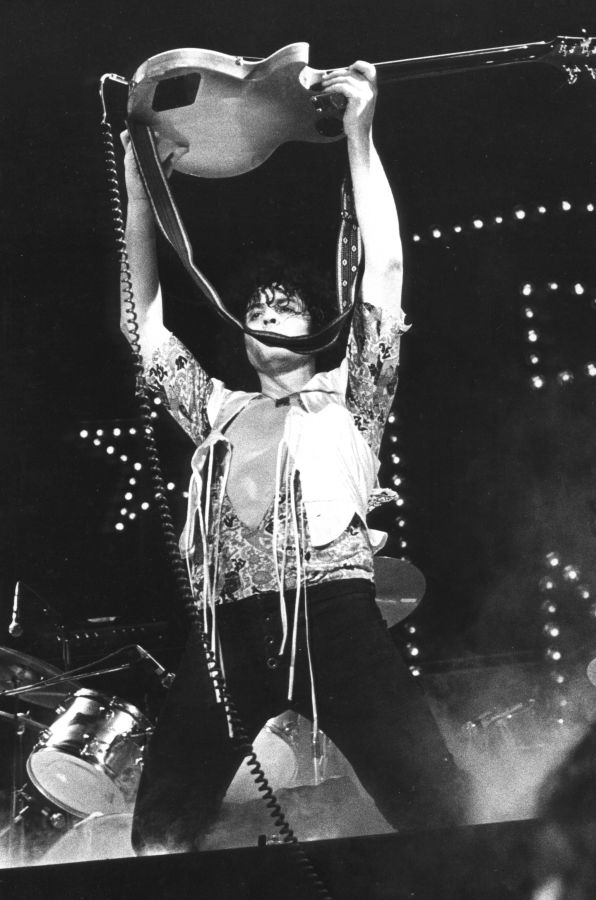
T-Rex-"Electric Warrier"
My Bloody Valentine-"Isn't Anything"
Ugly Cassanova-"Sharpen Your Teeth"
Sonic Youth-"Rather Ripped"
The Raconteurs-"Broken Boy Soldiers"
Centro-Matic-"Fort Recovery"
The Twilight Singers-"Powder Burns"
Art Brut-"Bang Bang Rock & Roll"
Motorhead-"No Sleep 'Til Hammersmith"

And in a recent revisiting of a couple of classic rock albums. I have determined:

Cream-"Goodbye" is a piece of fucking shit. I remember my Dad had this on 8-track when I was a kid. I picked it up on cd (cheap) several years ago with some of that "you loved it as a kid" nostalgia bullshit. It really reeks; these guys were supposed to be a supergroup, but half of the tracks on this last-gasp effort to make some jack before the band imploded are from poorly executed live performances. Ginger Baker plods along like anything but a proficient drummer. Jack Bruce needs to focus on playing a few notes instead of cramming a novel into his fretwork, and Eric Clapton sounds like he'd rather be playing for the Yardbirds. "Badge" is the only thing that saves this thing from being thrown against the wall.

Steve Miller Band-"Fly Like An Eagle" is actually a pretty good album. Again, another reminder from Dad's 8-track. I bought this at the same time as "Goodbye" (I guess a futile attempt to relive my childhood) and almost put this one back because I thought I couldn't stand Steve Miller and I was more than sick of the hits from this album: the title track, "Take The Money And Run," and "Rock 'N Me." Truth be told, Miller's work on his Fender is pretty impressive, and the hits sound a little more fresh in their original album sequence. This thing is apparently being re-issued on a 5.1 audio format, just the way "Steve Miller intended it" to sound. Whatever, Space Cowboy. This ain't 1976; quadrophonic audio didn't catch on.

Saturday, June 10, 2006

Sing Harpy

The Fall obsession is in full swing again, with some time spent on their early 80’s material, a salivation to pick up “Fall Heads Roll” (despite some consistently fair reviews of it) and that feeling that I don’t have any studio albums from 1991-2001 in my collection. It’s stupid; why split hairs over a band that I will admittedly never be able to complete and, in reality, have no desire to. They’re famously inconsistent but have a track record of never really releasing an entirely bad album. And when you look at bands with a similar 30+ year track record, that’s a pretty good batting average. I mean, fuck, even Scorpions released several duds (“Virgin Killer” anyone) during their lengthy career.
So let’s trace the history of this recent obsession: at my public Iowa University, there wasn’t a lot in terms of diversity. I’m sure that my Midwestern upbringing challenged a few of the left-of-center types, but what these judgmental folk didn’t understand was that my hometown was anything but a typical Midwestern home; the locale was built with fringe manufacturing blue-collar men and women, just an eyelash away from a lay-off and one beer away from alcoholism. Sure, these were the same people that would yell “Faggot!” without hesitation, but they were also oblivious to the fact that they were ridiculed with as much frequency as any minority group. It’s like the last concept they had of superiority was that they were white and heterosexual. Knowing this provided me with a better insight that some liberal collegiate who viewed them as just part of the problem. The problem was that these “enlightened” people would treat them with the same animosity that they were accustomed to and provoke the same behaviors that made them enemies to begin with.
I’d like to think that Mark E. Smith would understand this strange dichotomy too. I don’t see him as the type of person who would view intellectuals as know-all elitists. In fact, I see him feeling more comfortable with drinking a Bud with a factory worker and writing about it later on, in terms that the factory worker wouldn’t understand and in verses that would make him appreciated by fellow artists. I’d also like to think that he’d understand this lunacy.
So a friend in college had a mix-tape given to him provided by a lesbian who was in the same noise rock band as he was. The track included was “I Am Damo Suzuki” from then new “This Nation’s Saving Grace” album. The song was fascinating; it gallops along, sometimes losing time, while an inspired Mark E. proclaims his love for Damo, the lead singer for some of Can’s most important efforts.
From there, a slow, gradual dissent into Fall-dom began. “Nation’s” begot “Frenz” which sequed into “Oranj” and then “Extricate.” If you’re familiar with the Fall’s extensive catalog, you understand these references and you know that I had a long way to go from there. The task was too daunting; I left thinking that I had a fairly good idea of what the Fall were all about.
For a decade, I ignored their material. The continual changes in their line-up was offsetting. Of course, I didn’t know that this was part of their appeal: Mark E. is the Fall. And he’s an asshole. That’s pretty cool. Legendary BBC dj John Peel, who’s also pretty cool, cited The Fall as his favorite band. When asked why, he provided an infamous quote to his infatuation: "[they're] always different, always the same."
During this time, I kept a careful eye on Mark E.'s exploits, including the infamous fight he had with a fellow (then) bandmate moments before taking the stage. He went on with the show, in case you're wondering, complete with blood on his button down white shirt. Classic.
I came back. And at probably one of their highest points ever put to wax ("The Real New Fall L.P." a.k.a. "Country On The Clink"). It amazed me that they could continue to release such vital efforts some three decades into their career.
With this newfound revelation that I needed to examine their catalog further, I’ve gone headlong into becoming obsessive. It’s been a blast, really, particularly considering the recent exploits of their current tour.
Consider this: MES continually berated members of his band and his tour manager just days after arriving in America for their 2006 tour supporting the album “Falls Head Roll.” On the sixth day, the tour manager and every member of the band (except his wife, the keyboard player) made plans to quit because of the treatment they’d been receiving from MES. Opening band The Talk, apparently took sides with the rest of the Fall, and in an act of curious solidarity, the lead singer of The Talk picked up a dirty banana peel and threw it in Mark’s face during The Fall’s set. After ending the set early, the rest of the Fall grabbed a flight back to England, leaving Mark and his wife to complete the rest of the American tour.
In the hands of mortal men, this would have meant canceling the rest of the tour. But this is Mark E. Smith. He contacted his manager, who contacted The Fall’s North American record label, who contacted another band on the label, Cairo Gang, to learn the material and finish the rest of the tour. My friend who actually provided me with the mix tape that introduced me to The Fall, gives Glam-Racket some information about The Falls’ show at The Knitting Factory in Los Angeles:
Glam-Racket: Was Mark drunk?
MM: (incredulously) Was he drunk?! I saw these guys in the early nineties and thought the singer looked quite weathered for his age but there was nothing to prepare me for watching this doddering fellow who looked more like an octogenarian who had wandered out of his nursing home room than the singer of The Fall. It was sad, but wait, I will say that I quite enjoyed the show. His "new" band (early-twenties-somethings) did just fine and his voice is the same as always and there is something wonderful about just that. And they played lots of old school Fall and it rather rocked.
Glam-Racket: Did he twiddle with the knobs of the musician’s amplifiers?
MM: Indeed he twiddled knobs drunkenly and, of course, he walked around playing on everyone's instruments and at one point actually grabbed the neck of the guitar in the midst of a song which I thought was both extraordinarily silly and somewhat annoying. Most of all, however, I was pleased (thanks for the videoclip) that they played "Mountain Energy" which is the real reason for my rekindled interest in current Fall anyway, thanks to a track on a wonderful compilation provided by yourself. H. and myself and another couple had rented a cabin in the mountains over the past holidays and one night while lit on shrooms we listened to the comp, in particular we listened to "Mountain Energy" about four consecutive times and I'm almost ashamed to suggest it could have been more, but these were moments well spent. It's been a long time since I've had "favorite song" but there is just something about that tune that makes me swell.
Indeed....

Friday, June 2, 2006

Judas Priest-Sad Wings Of Destiny

Let me give you a glimpse of teenage life circa mid-80’s in small-town Iowa. During my senior year of high school, I stopped doing stupid things like going out for football, and pretty much any extra-curricular sport, choosing instead to do things like speech and drama. I enjoyed it more than having your Friday nights tied up with out-of-town games, hitting the “sleds” and running “hills” during practice, talking about how Judas Priest was the greatest band ever, and showering with a bunch of sausages. The fact was, speech and drama had a high proportion of chicks and gay boys, which meant that there was a much better chance of getting laid if you happened to be a heterosexual male. It’s mathematics, Holmes. Speech and drama also opened up a huge window of new music too; Judas Priest turned into Joy Division and black eyeliner replaced black AC/DC t-shirts.
But you can’t really take the metal away from horny teenage boys, even if you’re replacing football practice with rehearsals of “You’re A Good Man, Charlie Brown.” There were three other likeminded dudes that I hung out with on a regular basis and, there seemed to be a pattern that we developed after school: driving around, smoking weed, stealing candy from the Southside 7-Eleven, and then driving around some more. Here’s how clever we were: we’d mix Slurpee goodness into the Big Gulp cups and pay for the price of a soda. Four of us would enter the store, creating diversionary tactics, until the clerk would give up trying to watch member of the quartet. Then, another customer would walk in to pay for gas and a few of the lads would stuff their Levi jean jackets with Charleston Chews and other loose-item confections. It was brilliant. And we never got caught, just like Jane’s Addiction said…
We’d alternate cars, but there seemed to be one guy who insisted on driving more than the rest of us. He had a diesel Volkswagen Rabbit that was on its second or third engine and on its second or third cassette deck. The problem was, this guy had a very limited music selection, and it seemed that we were always listening to the same things over and over when cruising with him. Fucking Bruce Cockburn was a reoccurring tape, as was Pink Floyd “The Wall” and a, you guessed it, a Judas Priest album. That album was “Sad Wings Of Destiny.” I can tell you why he had this particular album: unlike Priest albums that we all grew up with (“Unleashed In The East,” “British Steel”), “S.W.D.” was usually found in the bargain bins, and being broke most of the time (we bought Bud Light while he would “splurge” on fucking Old Style) this was the only real “heavy” album he could afford. But whatever, S.W.D. turned out to be a pretty good album.
What made it good was the fact that it really didn’t sound like the Priest albums we were accustomed to; while heavy in some places (“The Ripper,” “Deceiver”), it also featured some bloozy jams (“Victim Of Changes”) a mellow ballad (“Epitaph”) and an almost prog-rock exercise (“Dreamer Deceiver”). It’s a pretty versatile album, and it marks the first truly awesome Priest record put to tape.
Priest later teamed up with producer Tom Allom, who managed to capture the band’s badassed fury on tape. And while they’d later, single-handedly re-invent heavy metal under his direction, “Sad Wings Of Destiny” hinted at their ability and provided a glimpse at how fluent Judas Priest really was underneath the leather.
But enough of my wordings: every time I listen to “S.W.D.” I get a craving for Bernie Kozar, Charleston Chews, and a Mountain Dew Slurpee. That fact alone makes it essential.

Sunday, May 28, 2006

May Top 10

Aside from looking at new employment opportunities (Dad advice: "The best time to look for a job is when you already have one"), watching the little dude master potty-training, and dealing with a little bit of mild-to-moderate depression, there's not a lot of "interesting" stuff going on around here. Oh wait: I secured a deal to get the Jeff Gordon car here. Everyone knows what a huge fucking NASCAR fan I am. /sarcasm


Spinning:

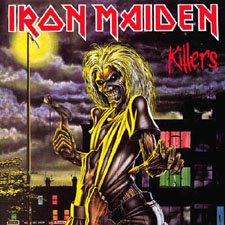
Iron Maiden-"Killers"
The Ramones-"Leave Home"
The Flaming Lips-"At War With The Mystics"
Judas Priest-"Sad Wings Of Destiny"
The Fall-"Grotesque (After The Gramme)"
Heart-"Little Queen"
Mission Of Burma-"The Obliterati"
David Bowie-"Scary Monsters"
Neko Case-"Fox Confessor Brings The Flood"
The Go-Betweens-"16 Lover's Lane"
(R.I.P. Grant McLennan and thanx to Cuz for sending Steve Kilbey's blog post regarding the funeral)

Van Morrison-Blowing Your Nose

This summary is not available. Please click here to view the post.

Tuesday, May 9, 2006

T Rex-Tanx


T-Rex’s “Tanx” became the unfortunate album that Bolan chose to release after the one-two punch of his non-debatable classic albums “Electric Warrior” and “The Slider.” Anyone interested in discovering Bolan is automatically directed to those two albums, and when you’ve found yourself overcome by how fucking awesome they are, you’ll be scratching your heads as to where you should go next.
I went with “Tanx,” which Rhino finally released domestically with extensive liner notes and a bonus disc, because most critics recognized it as the last good T-Rex album before the spaceship crashed.
Strangely enough, Bolan released a pair of excellent singles after “The Slider,” “20th Century Boy” and “Children of the Revolution,” which continued the glam-guitar-crunch that made him famous, but voted against including these singles on his next album. Instead, Bolan decided to start fresh with producer Tony Visconti and, at the same time, expand the formula that gave the liftoff to T-Rextasy. To do this, the pair spent a lengthy amount of time in the studio adding backing vocals, horns, and studio trickery. The timing was a little off perhaps as Bowie was in the middle of his Ziggy phase and was focused on the same sonic landscape that Bolan was beginning to turn his back on. So while Ziggy played guitar, The Slider played the mellotron.
When looked at in it’s original album format, “Tanx” doesn’t necessarily “tank,” but it doesn’t get off the ground in many respects. Many of the songs seems cluttered and restrained. It would have been great if Bolan went in the opposite direction when he decided to take off the platform shows and went towards an even rawer approach that would be even too salty for those teenage girls to take.
The great thing about the re-issue is that you get a bonus disc that actually accomplishes this: nearly ever song on the album is also presented in a demo form, and I for one found myself playing this disc more than the proper album. “Country Honey” becomes dirtier, “Broken-Hearted Blues” reveals itself to be one of Marc’s best ballads (the line “the wind on that night/was tempered like a knife” is just fucking great) and “The Street and Babe Shadow” is transformed into an acoustic back-porch blues shuffle. It’s the album that you wish “Tanx” would have been.
The aforementioned singles released before the “Tanx” recording sessions are included too, which means that you can pretty much veto Bolan’s ultimate direction and compose your own version of the album which is maybe just a hair beneath “The Slider.” And with “The Slider” being as great as it is, you have the ability of making “Tanx” the hat-trick that it should have been back in 1973.

Sunday, May 7, 2006

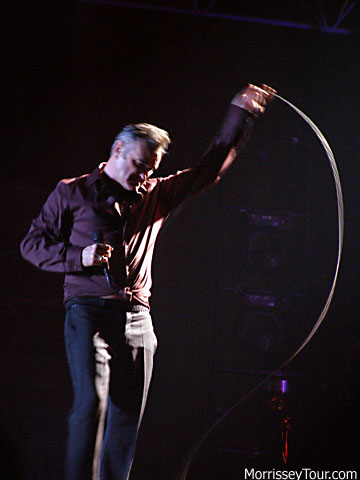
Morrissey-Ringleader Of The Tormentors


Who would have thought that by moving to Los Angeles, as in Los Angeles California, Morrissey would have found some kind of prolific inspiration that has enabled him to produce some of his best work of this solo career. “You Are The Quarry” sparked the return of Morrissey to relevance. So what happens when he moves from Los Angeles to Italy? Listen, if he can return to relevance in Los Angeles, then a move to Italy probably won’t detract from his progression. What’s of deeper concern is that Morrissey has reportedly found love in Italy, and as we all know, Morrissey is seldom happy about anything. At least on record.
“Ringleader of the Tormentors” finds Moz teamed up with Tony Visconti and the results are magnificent. Whereas his work with the late Mick Ronson found Morrissey channeling Mick’s glam heritage, this effort with Visconti, the mastermind of some of glam’s most important albums by Bowie and Bolan, finds the team going beyond the genre’s narrow scope. They get a little help with some great orchestration from Ennion Morricone, who is best known as the man who helped score many of Sergio Leone’s spaghetti western movies.
Happiness hasn’t affected Morrissey’s outlook much; he’s still as miserable as ever but he’s delivering the morose with lyrics that are more to the point. And the point is this: he has found that in this world of shit, there’s nothing sweeter than love.
“I once was a mess/of guilt because of the flesh” he admits on “At Last I Am Born.” And it’s love that has suppressed his Catholic guilt (to an extent) and it’s love that has finally, metaphorically, transformed him into a….middle aged gay man. Is his sexuality really relevant? I suppose not, but it does explain a lot of things and when you take this into consideration you’ll see that “Ringleader of the Tormentors” is Morrissey at his most honest, his most randy, and his most flamboyant album in his career.
“There are explosive kegs/between my legs” he admits on “Dear God Please Help Me,” one of the album’s most talked about tracks. Whereas on previous Morrissey songs where he sang about restraint, it seems that now he’s ready to let his proverbial load go and is contending with years of religious teachings that made him ashamed of his sexuality. It’s refreshing to hear him backpedaled from the “celibate” tag (which placed him as more of a deity than rock star) and demonstrate that he is, like we knew all along, human like the rest of us.
“Ringleader of the Tormentors” does have a few distractions: “In The Future When All’s Well,” “I’ll Never Be Anybody’s Hero Now” and “To Me You Are A Work Of Art” sound like standard-issue solo Morrissey. They’re the type of songs that make people continue to wish for that never-gonna-happen Morrissey/Marr reunion; there the type of songs that make you wish Morrissey would have tried just a little bit harder to make “R.O.T.T.” into that landmark album that actually rivals the worst of The Smiths catalog.
There are moments when it gets close: “Life Is A Pigsty,” the album’s epic, starts with a subtle groove until finally giving way to a wash of orchestration and bombastic timpani. While repeating the song title over and over, Moz states “In the final hour of my life/I’m falling in love again.” And if this righteous fellow can admit that and continue to challenge his own muse in the process, then all we can do is rejoice in the fact that he finally popped his cherry. Or “kegs” as the song goes.

Thursday, May 4, 2006

The Fall-Hex Enduction Hour


I should have changed my New Year’s resolution to state that I would purchase six Fall albums, because I’m already two ahead of the Dylan resolution. Lord knows, The Fall approach Dylan in their proficiency, so I’d have plenty of product to chose from.
“Hex Enduction Hour,” self-described as “a well-produced noise thing,” is just that and generally viewed as a classic in The Fall cannon.

What a cannon it is, as Mark E. Smith opens the release with “The Classical” by asking “Where are the obligatory niggers?/Hey there, fuck face!” Smith is already coming out swinging and the rest of the band rollick along with a two drummer line up and some innovative guitar work from Marc Riley and Craig Scanlon. “The Classical” is one of the greatest and most vicious Fall songs ever.
How fucking cool is Mark E. Smith? Pretty fuckin’. Consider the track “Who Makes The Nazis?” where Smith accurately names “bad bias tele-v!” as the culprit. Who makes the Nazis? “Balding smug faggots/intellectual half-wits.” Brilliant. And this was over a decade before the advent of Fox-TV.
How influential is Mark E. Smith? Pretty fuckin’. Consider the track “Iceland” where a simple piano phrase lies underneath drums, percussion, and high-fret bass phrasing. Anyone who’s ever owned a Sugarcubes (or solo Bjork) album can pretty much gather how “Hex,” particularly this track from it, may have been their touch-stone. “And the spawn of the volcano/is thick and impatient/like the people around it.” Now you know why Sigur Ros made up their own language; M.E.S. has complete mastery of English prose.
I’ve got to hand it to Sanctuary records for expanding some of the Fall’s catalog like “Hex.” The albums are presented in their original form with an extra disc for bonus material. The packaging is also top-notch with informative liner notes. For example, when the album was released, Flexipop magazine had Mark E. Smith review a fucking Krokus album. If that wasn’t awesome enough, the magazine also had the lead singer of the Swiss heavy metal band Krokus, Mark Storace, review “Hex Enduction Hour.” Mark, who found a bit of notoriety with his ample chest hair and a cover of “Ballroom Blitz” felt that The Fall album was “One long downer”and that "this type of music doesn't appeal to me." One would think that someone like Mark E. Smith would be upset about a comment like this, but when he was asked about the current flavor of British pop music at the time like Duran Duran and Spandau Ballet, he admitted that he would rather listen to Krokus.
“And This Day” ends “H.E.H.” with 10 minutes of chaotic noise with what could be the most appropriate album closer since The Stooges “L.A. Blues.” Starting off with a certain amount of structure, the song gallops into a dissonant groove while Smith yells “everywhere just no fucking respite for us here!” According to the liner notes, this ten minute track was edited down from the original recording which clocked in at close to 25 minutes. Mark wasn’t very happy about that decision, either. But when is Mark happy?

The Beatles-The Capitol Albums Volume 1


Beatlemaniacs are funny. I would consider myself one, but I am by no means a completist. To be honest, I couldn’t afford to be one if I wanted to and I think the baby boomers have both the money and the inclination to snap up most of the good memorabilia anyway.
Just consider the price tag of “The Capitol Albums: Volume 1” (seventy bones); it’s a box set clearly designed for aging boomers who have the spending cash to get the American Beatles albums they’re used to…and have been whining for ever since the band streamlined the catalog and released only the “proper” British albums in ’87.

A brief explanation: Capitol records cherry picked the Beatles British Parlophone records and released them as new titles domestically. These albums came in two forms, mono and stereo, and Capitol also used “duophonic” mixes in some of the stereo tracks. For laymen, “duophonic” essentially means “adding a bunch of reverb” to the tracks.
While these American releases may have not been exactly what The Beatles themselves intended, the millions of American fans that bought them understandably think of them fondly. Capitol records, always ready to take a music fan’s money, decided to release the American albums in a box set right before Christmas in 2004.
While I already own most of this material already in their British forms, I will admit missing the American versions a little; I was introduced to The Beatles thanks to my parent’s copy of “Meet The Beatles,” “Beatles ’65,” “Yesterday…And Today” and “Beatles VI.” Plus, it’s been nearly twenty years since someone has properly remastered The Beatles albums in any configuration. This means that if you buy, let’s say, The Beatles “For Sale” cd, it sounds exactly the same way it did in 1987: tinny, compressed, and not a lot of punch. “The Capitol Albums” is remastered (albeit using 2nd generation copies for the American version) and a lot of Beatle fans are excited about this.
However, there are lots of Beatles fans that are actually up in arms about the decision to release the American albums. It’s really quite humorous to visit sites completely devoted to this debate, and a few prominent members of the Beatles camp (but not directly related to them or their legacy) got involved in the dispute.
With all of this, I thought it would be cool to actually have the Capitol albums, but there was no fucking way I would spend $70 to have ‘em. All they are is the stereo and mono versions of the albums with no real rare treats (only a few minor differences in a handful of songs can be found) that warrant spending that kind of cash.
But Sam Goody’s going out of business news is my gain: with much of the store picked over, I did find a copy of this at 60% off, which was cheaper than the used versions that I had seen online.
Now “Meet The Beatles” is a five-star album, period. The sequencing contains eleven Beatles’ originals and this is critical. From this album onward, it became universally acceptable for pop groups to actually compose their own material. It was also hugely successful, and it forced pop bands to think in terms of l.p.’s instead of focusing on single-to-single.
“The Beatles Second Album” essentially compiles a lot of the band’s cover material and, either intentionally or by luck, the sequencing works. What you have is one of the band’s most rocking albums.
“Something New” starts to show signs of the bottom of the barrel and “Beatles ‘65” is a trainwreck of sequencing (“Rock & Roll Music” goes into “I’ll Follow The Sun” for Christsakes); the band had started to progress musically and Capitol really should have stopped the practice of bastardizing the British albums at this point. The band was making Capitol a ton of money, and there really was no need for this kind of strategy.
Capitol records didn’t abandon the practice of course, and this means there is a “Volume 2” available now and you won’t find me rushing out to buy it anytime soon.
Sure, as stupid as it sounds, I would actually like to have a version of “VI” because I completely ruined my folk’s copy of it so this title holds some sentimental value to me. But there is no way I’m spending full retail for it. Here’s the main reason why:
Capitol records has done a simply awful job of packaging Volume 1. The box is pathetically flimsy and the individual discs are packaged in cardstock album replicas instead of jewel cases. That’s not necessarily a bad thing, but the actual artwork looks like shitty scans of the original albums in either a stupid attempt to make the things appear four decades old or because Capitol records are run by retards.
Why the fuck would you release a premium priced box set like this? At the most, this thing is only worth half of the list price and I would advise any Beatle fan from avoiding this overpriced attempt at making a few extra bucks for the label that incidentally passed on the band four times before signing them. Save your money and wait for the updated mastered versions of the proper albums.

Monday, May 1, 2006

Version 3.0

For those of you that have traveled to this new home from another site, I appreciate your understanding. I’m fairly confident that Glam-Racket is hidden enough that the savvy computer literates from my past (read: the uninvited) won’t be able to bother me here, unless they decide to pursue a full-time job pursing my on-line musings.
It’s sad, really, and I feel a tad pretentious notifying a select few saying “Hey, if you want to check out my writ, come to this site” because, like I’ve said before, it’s not really about you. No offense, but I’ll write about what I want and do it within the time frequency that is allowed to me. At the same time, I do occasionally produce the obligatory personal-life rants, which gives me a certain amount of sanity and you a glimpse into a world of mine that is, suffice to say, fairly mundane and boring.


To that end, I’m a fairly simple person; there are times that I like nothing better to do than just listen to music. It’s been with me since, literally, I was two years old. Essentially, I was left to my own devices as an only child and in that solitude I found music. Some of you know this story already and some of you may be thinking that I’m playing some kind of “tale ‘o woe” card here. I’m not. Rock and roll has served me fairly well as I firmly believe that I have learned more from record grooves, magnetic tapes, aluminum discs and computer music files than any other source.
Because of this passion, I am very opinionated about music and enjoy a good argument every now and then. I like talking about it in great detail just as I used to read in great detail every record label, liner note and lyric sheet that came my way. It’s completely wrong in some ways and irrational in others, but you can fight nearly four decades worth of habit.
Which leads me to a fear that I have: Someday, I won’t be able to have tangible items that hold music. I understand and partake in downloads and I understand the current trend in music listening device. But I’m scared that at some point my own preferred format will be deemed to be obsolete. It’s not even about the format, really, just the idea that a little piece of art that an artist has created won’t contain the same meaning as what I’m accustomed to now. That is: the label, the artwork, the sequencing, the information, the entire package. I feel a little gypped with downloads and equate them to the same feeling I had when someone dubbed of an album for me on a Maxell XL-II 90 minute cassette. And like those times, if someone gives me (or if I download) and entire album that I end up really enjoying, I’ll probably get a copy for myself down the road. It’s fairly stupid as record company’s probably love me for re-buying the same stuff over and over again, and I completely know that if the music industry ever came up with a “new and improved” format that I’d probably do it all over again and be stuck with thousands of virtually worthless compact discs that don’t hold a fraction of the price that they once had.
The thing is: I don’t see an “improved” format coming around. What I do see is a large group of younger music fans that don’t give a shit about the packaging, the sequencing, etc., and as a result, can’t “get” where I’m coming from. It’s automatic delivery, baby, and being the first kid on the block to have a leaked copy of a new album is more credible than actually knowing the words, the producer, the studio it was recorded in, and if the songs belong to B.M.I. or A.S.C.A.P.
I can’t fathom an environment where my shit is “stored” on a flash card that I bring over to someone’s house and plug it into a USB port or something. I’m sure I’ll acquiesce if I’m forced to, but the gratification will be lost. And, to put it into relative terms, the idea that I only have snapshots of these “friends” instead of having the real thing present is a very troubling thing for me.

Saturday, April 15, 2006

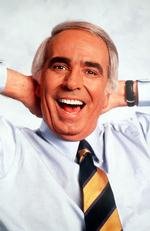
The Tomorrow Show with Tom Snyder-Punk & New Wave

On maybe a handful of occasions growing up, I stayed up late enough to watch Tom Snyder’s “Tomorrow” show on NBC. I knew that the guy smoked like a chimney. That Dan Ackroyd did impersonations of him on “Saturday Night Live.” I also knew that the show was fairly boring. But what did I know? I was young, for Christsakes. I didn’t know that Snyder had a few rock acts/musicians on his show every once in a while. And admittedly, I probably wouldn’t have known or appreciated many of the artists he interviewed at the time.
But years have passed and new music heroes emerged in my life. And wouldn’t you know it: a few of them actually passed through Rockefeller Center and entered into Tom Snyder’s domain.
What his domain actually was a fairly quirky and somewhat unprofessional interview show that broadcast when most people were fast asleep. By “unprofessional,” I’m referring to Tom’s incessant smoking, his continual joking around with the crew, and general lackadaisical attitude towards building ratings.
NBC tried several things to change this: various opening sequences, including an audience (stupid idea) in the studio during later broadcasts, and introducing (then) divisive topics for discussion.
It’s easy to forget that “punk” music (also known as “new wave”) was pretty divisive back in the day. It’s not easy to forget that Tom Snyder was helplessly out of touch with music in general back in the day; I’m sure he could wax poetic about The Beatles or any other socially relevant band from the 60’s, but punk rock? Please.
Nevertheless, you gotta give Snyder credit for inviting some of rock music’s most influential artists on his show, thereby, introducing a country to exciting new music that typical mainstream outlets avoided like the plague.

A new dvd set, “The Tomorrow Show with Tom Snyder: Punk & New Wave,” collects material from the show during its late 70’s/early 80’s run on NBC. Paul Weller and The Jam make a visit, as does a shy Patti Smith, The Ramones, Iggy Pop, Elvis Costello, The Plasmatics, and others, including non-music footage that, in the whole scheme of things, really have no place on this collection.
Patti Smith probably has the most coherent and telling interview in the entire set. She appears very shy yet still very eloquent while she marvels with the rest of us that she’s actually on national television.
Joan Jett makes and appearance with her manager Kim Fowley as they discuss the state of music with a very narrow-minded Bill Graham and an even more narrow-minded L.A. Times music critic Robert Hilburn who sounds like he has a few Eagles’ albums in his own music collection. The panel discussion makes Kim Fowley look like a complete idiot, but this is his own doing; he appears in heavy make-up and tries to get as much screen time as he possibly can with retarded quips about nothing and how he’s working with Helen Reddy on (then) new projects that, if you haven’t figured out, got her absolutely nowhere. Even a young Joan Jett looks embarrassed that he actually represents her, and who wouldn’t?
Iggy Pop is positively on something and he looks worse than I have ever seen. With rotted teeth, he can barely sit still and throughout the interview segment, he gnashes his teeth while trying to explain his past bad behavior of cutting himself was probably nothing compared to the bad behavior that was running through his veins during the time of taping. The footage is positively frightening.
There are two interviews and performances that most people will remember from the broadcasts. The first is Wendy O’ Williams and The Plasmatics, a band that appeared on the “Tomorrow” show twice with the second one being the performance that people remember the most.
In it, Tom seems a little smitten with the flirtatious W.O.W., and she reciprocates this by really divulging nothing about the genre and her place in it. Wendy, of course, was never really an artist with much substance to begin with and her band never really moved beyond shocking an audience rather than becoming musically groundbreaking. They were proficient to a point, but they never managed to forge ahead of lifting musical ideas from others and mixing it with Hollywood-esque stunts.
Case in point: the second appearance shows a performance of “Masterplan” from their release “Beyond The Valley of 1984.” The song itself is nothing special, in fact, it borders more towards metal than punk. To sell it, Wendy brought a car into the “Tomorrow” studio and blew it up. It’s probably the most violent close of a song since The Who blew up Keith Moon’s bass drum on the Smothers Brothers show. But while that seemed like a legitimate prank filled with spontaneity, the Plasmatics stunt seems choreographed to a point where it isn’t shocking at all. Add to this, you can see Richie Stotts, complete with a blue Mohawk, run into the crowd during the first song and land on the lap of a unsuspecting middle aged white guy. Apparently, that footage was so good that they used the exact same thing during the “Masterplan” performance.
The second interview is the one that people remember the most: John Lydon & Keith Levene vs. Tom Snyder. Lydon, in a particularly crabby mood, plays hard to get with Snyder by answering very few questions and coming across like a spoiled baby. He tries his best to show Snyder that he’s yet another representative of the establishment that he has to topple, but what Lydon fails to understand is that Snyder isn’t part of the establishment, that he doesn’t pretend to understand punk at all, and that this isn’t the BBC where he’s impressing a huge audience anyway. This would have been a perfect opportunity to promote the P.I.L. “corporation” that he keeps referring to, but instead, he chooses to promote an on-air feud against someone who doesn’t give at rat’s ass about anything that Lydon has ever done. Throughout it all, Snyder doesn’t get flustered and eventually wins the match by smacking Lydon with the sarcastic line “It’s unfortunate that we’re all out of step except for you.” Lydon’s too stupid to realize he’s been beaten and Levene’s too much of a junkie to speak coherently about anything during the interview.
“The Tomorrow Show with Tom Snyder” is a fascinating document of a different era of television from one of the media’s most unusual interviewers. It’s a very slow paced show to begin with, so the fact that Snyder provided these artists with a venue is pretty surreal in itself. You don’t actually learn anything knew about the artists and the performances aren’t very noteworthy. What you get is a deep voiced guy from Milwaukee interviewing some challenging artists and an opportunity to witness the curious trainwreck in all its digital glory.

Wednesday, April 5, 2006

Death Cab For Cutie-Live Review

Death Cab For Cutie
The Pageant, St. Louis, Missouri
4/4/06

So you’re in St. Louis on a Tuesday night and you don’t want to hang out in the Northwestern suburb hotel all evening. You look up what’s happening downtown and notice that one of your favorite bands at one time is playing live. Decisions, decisions. First of all, there’s a part of you that feels like you’ve outgrown Death Cab For Cutie; you can only take so many albums of sensitive meanderings and, frankly, you didn’t buy their last album “Plans” (their first major label release) because it wasn’t as good as the album before it, “Transatlanticism,” which was most awesome. Secondly, you saw “Drive Well, Sleep Carefully” and determined that not only were Death Cab For Cutie pretty boring fellows, but their live performances were not filled with any elements that would make you say “They were great live.” Thirdly, the venue is, like, 45 minutes from your hotel and why fight traffic to go see a band that isn’t known for memorable live performances. Fourthly, the show is sold out.
Fuck it, you drive in your car through some pretty unsavory neighborhoods with a back-up plan to grab a decent dinner and do some record shopping at a store you had good luck with before (read: a used copy of Alexander Spence’s “Oar”). You walk down to the venue and you’re greeted by a black man who offers you a salutation of “Tickets.” You buy them. And then you’re in line to go see Death Cab For Cutie.
Let me back up and vent a little bit about the current state of ticket pricing, thanks in large part to our friends at Ticketmaster. General admission tickets for this show were $25. Ticketmaster adds another $5 for their “convenience charge.” They add another $1 for a “venue” fee. They charge for postage. In total, if I actually bought these tickets through Ticketmaster, I would be looking at least $38 for them; I paid $30 for my ticket. We live in a time where I can actually buy a ticket to a sold out show from a scalper for less than what I could have gotten them legitimately.
The first thing I noticed about the show was the audience. Death Cab For Cutie is an alternative rock band for chicks. The crowd was made up of about 60% chicks, which made me feel like a pansy considering that I related so much to albums like “We Have The Facts And Are Voting Yes” and “Transatlanticism” and think the world of songs like “Movie Script Ending” and “Photo Booth.” These chicks apparently really liked “Plans” they sang every song from that album and had multiple orgasms when Ben came out during the first song of the encore by himself and sang “I Will Follow You Into The Dark”. They sang the words, called up their girlfriends and held their cell phones up in the air to provide them with a taste of the sensitive boy onstage with an acoustic guitar.
But I didn’t go out of my way to people watch at the DCFC show; I came here for the music. All told, they played plenty of my favorites and less of the ones I didn’t care about. What that means is they featured a lot of material from “Transatlanticism” and “The Photo Album,” and if you’re familiar with those albums, you’ll understand there was a lot of drama that DCFC had to sell on a Tuesday night. Here’s the thing: it dawned on me that those albums are now several years old and, I’d imagine, that some of the emotional connection behind them have been tapped clean. This is assuming that the subject matter of the songs are based on Ben’s own real life events. Can a person deliver first sexual awakenings (“We Looked Like Giants”), deadbeat Fathers (“Styrofoam Plates”) and finding old pictures of lost loves in glove compartments (“Title & Registration”)? That’s questionable. But it didn’t stop me from realizing what a kick-ass song it ultimately was.
The crowd was most responsive to the “Plans” material, in which case, it was strange that they didn’t perform more from it. Like I said before, it’s not my favorite album by them so I’m not complaining. But for the chicks who voice approval during the first drum beats of “Soul Meets Body,” I’m sure they would have liked to continue playing the role of Jenny Lewis a few more times than what the band offered.
Ben played his retarded electronic drum pads and the road crew brought out a little drum kit so that he could play it for, no shit, about a minute and a half at the end of “We Looked Like Giants. A little retarded, especially considering that the band has found real talent in their existing skin-pounder, Jason McGerr
Overall, the music was non-threatening, perfectly suited for non-threatening white chicks. The band was mixed in a very pedestrian fashion; guitar’s rarely got to a level of distortion and Gibbard’s voice was always high in the mix. Interplay was kept to a minimum, with the exception of the aforementioned “drum duo” during “Giants” and the obligatory extended ending of “Transatlanticism.” The rest of the material didn’t deviate too much from the album versions, aside from a couple of changes in vocal inflections here and there. Ben and guitarist Chris Walla demonstrated their “multi-instrumentalist” titles by frequenting the keyboards on most songs. That’s the problem for me: leave the keyboards for the occasional textural treatments and for Postal Service releases. For me, one of the intriguing thing about DCFC was the guitar interplay underneath Gibbard’s knack for writing good melancholy. Now I understand that Postal Service moved 500,000 units and that “guitar interplay” doesn’t always translate into commercial success, but it’s certainly a lot more interesting than replicating synth-filled tales of love lost. “Interesting” is subjective, of course, and judging from those in attendance, they were more interested in tales of love lost than how it was presented.
Setlist:
Marching Bands
New Year
Live Here
Title and Reg.
President
Crooked Teeth
Differen Names
Movie Script
Company Calls
Photobooth
Styrofoam Plates
What Sarah Said
Soul Meets Body
Expo '86
Giants
Settling
Encore:
I Will Follow You Into The Dark
Title Track
Transatlanticism

Thursday, March 30, 2006

Wilco - Live Review

Wilco
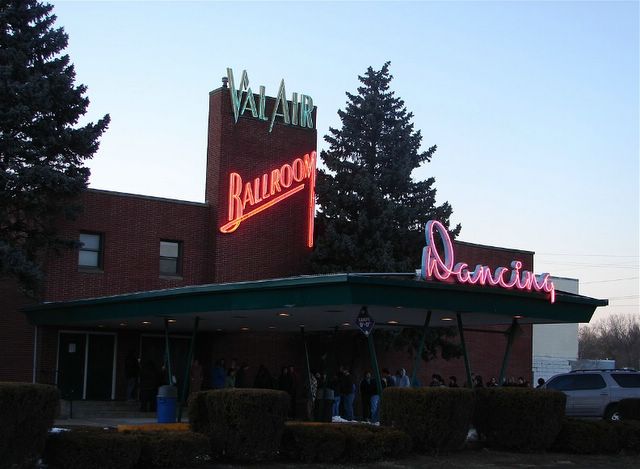
The Val Air Ballroom, Des Moines, Iowa
3/22/2006

Touring to support no album can be a great thing for fans; a band has no obligations to anyone except themselves and the people that pay money to see/hear them. Combine this with the last show of a tour and you can expect even better things; a band may throw everything at the crowd because, what the fuck, it’s the last show.
Wilco has their road crew pick out the set list for the final show of every tour, and if there’s any consistency among roadies, hopes were high that they’d come up with a rocking set. They did. The set at the Val-Air Ballroom was littered with loads of stuff from “Being There,” “Yankee Hotel Foxtrot,” “A Ghost Is Born” a new one and a nice surprise (more on that later).
The Val Air Ballroom was a venue that I’d never been to before, but the retro vibe makes me want to check out a few more shows there again. Check out what greeted us as we approached:

How fucking bad ass is that? It’s a ballroom in every sense of the word and I’m sure a few rugs were cut on the hardwood floor during its heyday.
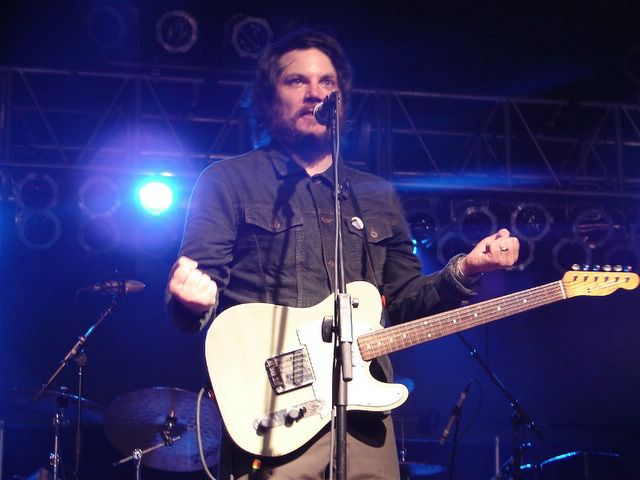
Opening with a stellar “Handshake Drugs,” Tweedy and Co. looked as haggard as ever, sporting the obligatory boycott of the new Gillette razor and a few new faces in the lineup that I didn’t notice when I saw them last (the tour before “Yankee Hotel Foxtrot” was released).
Whereas that show truly seemed like a band effort, this Wilco seemed like Tweedy’s baby; he’s filled the band with very capable musicians who can appropriate his vision without challenging it. So far, it’s working. “A Ghost Is Born” probably wouldn’t have been made with Jay Bennett, and truth be told, I don’t think I’d like a show filled with Bennett’s request for “easy rockers.”

Jay’s exit has led to guitarist Nels Cline’s arrival. This guy can flat out play, whether its tearing up the Jazzmaster ala Robert Quine or settling back with a lap steel, Cline’s only downfall was making a few accidental noises during a soft take on “The Lonely 1,” a song that typically only features Tweedy with an acoustic. The glitch prompted a smile from Jeff and a few lighthearted laughs from the understanding crowd.
Speaking of: the audience was unlike any I had seen before. It was a mixture of general admission drunks, middle-aged hipsters, and even a few grey-haired boomers who didn’t seem too thrilled with some of the evening’s feedback laden landscapes.
The one song that everyone seemed to agree on was the final selection, a note-perfect rendition of Blue Oyster Cult’s “Don’t Fear The Reaper.” Featuring the drum tech on cowbell, the band channeled the facsimile with precision and with the carefree attitude of a group on the last show of a tour and with nothing to really promote.

Setlist:

Handshake Drugs
I Am Trying to Break Your Heart
Forget the Flowers
Hummingbird
At Least That's What You Said
On And On And On (the new one)
Shot in the Arm
Poor Places
The Lonely 1
Spiders (Kidsmoke)
Jesus, Etc.
Theologians
I'm the man who loves you
Walken
I'm a Wheel
Encore #1:
Misunderstood
Far, Far Away
Magazine Called Sunset
Kingpin
The Late Greats
Encore #2:
Red Eyed & Blue
I Got You
Hoodoo Voodoo
Don't Fear The Reaper

Wednesday, March 29, 2006

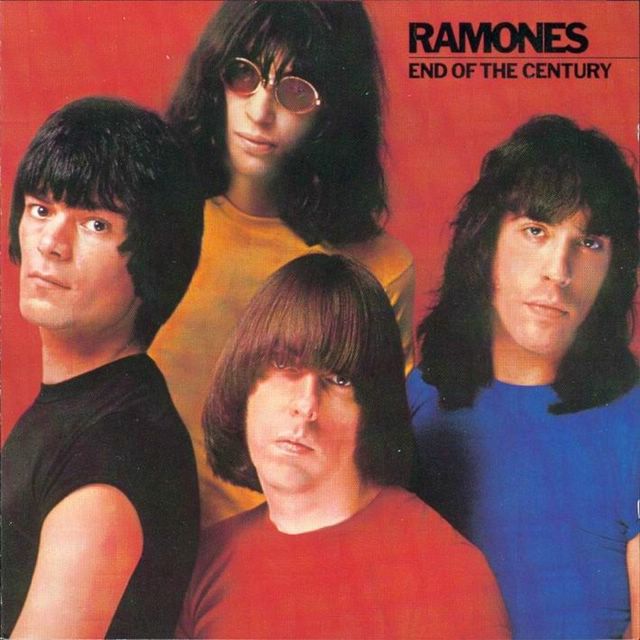
The Ramones-End Of The Century

So a former assistant of Phil Spector files suit against him and I’m reminded to review The Ramones “End Of The Century” album.


By 1979, The Ramones understood that they’d essentially painted themselves into a corner by repeating their “formula” over the course of four albums. It was time for them to either go for broke or forever be linked with the underground minions of rock music. Since the bruthas regularly acknowledged their love for late 50’s/early 60’s AM radio, it was no big stretch of the imagination that they partnered with a legendary icon of this era: producer Phil Spector. At the time, however, the press made the pairing out to be a huge deal; I specifically remember when this album was released that the entire focus was on Spector and The Ramones teaming up. I remember reading that there was some “tension” during the recording of this album, but the whole idea of a Ramones presented in a monophonic wall-of-sound recording is, to this day, a very logical and positive idea.
From the lead-track, “(Do You Remember) Rock ‘N Roll Radio,” the combination works out in a great way. The song perfectly epitomizes the nostalgia of 60’s radio (and early 70’s too, with a sly mention of T-Rex) while eloquently containing the simplistic power of this New York City quartet.


Although not as essential as The Ramones debut, “End Of The Century” remains an important document in their catalog and I’ve found myself repeatedly spinning it lately. The remake of Dee Dee’s “Chinese Rocks” and side one’s closer “Let’s Go” hark back to traditional Ramones territory, but the biggest difference is how Spector puts Joey’s vocals higher in the mix. Curiously, Spector was taken by Joey’s vocal abilities and occasionally confided in him that the rest of the band was simply holding him back. For myself and most fans in general, Joey was always the goofy one up front while the rest of the Ramones managed to forge ahead with some rudimentary chords and energetic tempo. What Spector did is put the spotlight on Joey and force the rest of the band into a recording technique they weren’t accustomed to. Rather than roll tape and record the performance, Phil made the band do take after take of the same song. Since Joey was Spector’s baby, and since this was the first Ramones recording to feature Marky on drums, Dee Dee and Johnny became frustrated with Spector and disenfranchised with the entire project.
Personal dramas aside, the end result is an album that not only marked the first time they attempted to departure from the traditional Ramones sound and “End Of The Century” marked the last truly great Ramones album.

Tuesday, March 28, 2006

Paul Stanley-People, Let Me Get This Off My Chest

For over a month, an unofficial Paul Stanley disc has been frequenting the cd player. Before you think that this is some musical follow-up to Stanley’s 1978 Kiss-era solo effort, remember that some of Paul Stanley’s best material is when he’s introducing his musical material. “People, Let Me Get This Off My Check” is a 70-track compilation of Paul Stanley stage banter recorded throughout the world in various venues during various tours, both Kiss and solo gigs.
If you’ve ever been to a Kiss concert (my review of a 2000 show), you’ll know that half of the concert is essentially Paul Stanley bullshitting the audience and making them believe that the next song is the second coming of Christ. The funny thing is that 1.) Stanley is Jewish 2.) His shtick repeats with alarming frequency and 3.) the whole notion that a band so devoted to giving a spectacle of a show has to remind everyone in attendance that it’s a spectacle of a show is fairly disingenuous. For some of us, that’s what’s fun about seeing a Kiss show; you get the sense that both you and Stanley understand that the entire spectacle is not really about the music, but in the way you sell it.
And sell it he does. Every. Fucking. Song. This fucker cannot shut up. Seriously. The great thing is that material is hilarious, and hats off to the dude who decided to compile all of this shit. There clearly is a market for people who think Paul Stanley is ten times funnier than Dane Cook.

Having only seen Kiss once in my life, it surprised me that many of the same rants included on this disc were verbatim the ones that I witnessed live. It shouldn’t have surprised me as this was a band that calculated almost every single move from the moment somebody in the band said: “You know what we should all do? Put some whiteface on!”
Paul repeatedly reminds the Army that they’re getting their money’s worth (presumably, it’s the audience that he’s referring to), that the next tune is the first time they’ve played it on tour, that he was talking backstage to someone (The promoter? The beer vendor? The caterer?) about what kind of alcohol that people in the area like to drink, that they’re just getting started, and that he’s got an “uzi of ooze” in his pants.
He continually states the name of the city they’re playing in over and over. He yells out some very unheavy phrases like “Yes indeed” and “Oh, my goodness” and does nothing to curtail the rumors that he is a homosexual by asking “Guys, how many of you liked to get licked? You lick me; I lick you.”
In almost every bit of dialogue, Stanley is practically yelling at the audience for no good reason. Its one thing to give an obligatory “I can’t hear you,” but to repeatedly scream “Can you hear me?!” is criminal. Fuck yes we can hear you dude! With your fucking p.a. they can hear you all the way in Greenland.

Tuesday, March 14, 2006

Love Is All-Nine Times The Same Song

Sweden rocks. But I’m partial to that country; at my parent’s house, there is a cedar chest that my relatives brought over from Sweden when they immigrated over in the late 19th century. There’s also a Swedish bible, but I haven’t even bothered reading the English translation. If you haven’t guessed, I sold my soul to rock and roll.
So go ahead and throw Ace of Base, Roxette, and even Yngwie Malmsteen at me. I’ll raise you a ton of great bands that demonstrate a consistent stream of innovative rock music.
One of those bands is Love Is All, who released “Nine Times That Same Song” belatedly this year (it was originally scheduled for a 4Q ’05 release) and it’s another example of how Sweden rocks.


You’ll initially notice that Josephine Olausson sounds a lot like Karen O of the Yeah Yeah Yeahs. But Karen O sounds a little like Marion Coutts from Dog Faced Hermans and (sometimes) like Chrissie Hynde from The Pretenders. Spin “Nine Times That Same Song” a few more times and you’ll start to notice other things, like how the band fucking rocks. By “rocks” I mean in that late 70’s/early 80’s post-punk kind of way when bringing a trumpet into the mix and throwing in a reggae dub arrangement was considered “punk” enough to even be considered.
That’s a good things, sometimes, particularly when your vision exceeds your actual recording budget. A lot of “Nine Times That Same Song”’s charm actually comes from the low-fi recording technique. You have to struggle to find some of the musicianship that’s deep in the tape hiss, but when you do, you’ll end up like me and spin the thing more times than you wanted to during your initial Yeah Yeah Yeah’s comparison.
The album, perfectly timed under 40 minutes, focuses on one subject matter: love. Specifically, the roller coaster of it all. One moment, Josephine sounds giddy and hard to contain. On others, she’s dark and frustrated. Been there before? Me too. We all sing the same song of love, but most of us have never made an album as clever and captivating as this one. Like Roxette told us: listen to your heart.

Sunday, March 5, 2006

The Arctic Monkeys-Whatever People Say I Am, That's What I'm Not

Remember when I said how The Strokes were an influential band, particularly across the pond? By “pond” I meant Atlantic ocean and by that I meant England. By “influential” I meant that dozens of British bands took a look at the Strokes blueprint and started dishing out a shitload of smug young rock bands. What’s cool is how many of these bands managed to actually outdo what the Stokes started. So while we’re reeling in the disappointment of the Strokes third release, we’re suddenly enraptured at England’s Arctic Monkeys debut album “Whatever People Say I Am, That’s What I’m Not.” How much are we reeling? The album became the fasted selling debut indie album in England’s history and, holy shit, the album sold enough copies here in Amerikkka to debut in the top forty. The Strokes are probably laughing their asses off at how the Monkeys are going to work efficiently while the English music press prepares to dismantle them around the time they begin working on their second album.
You see, every other week, N.M.E. et all seem to “discover” a new flavor and force feed it down our/their throats until we can’t even look at eating it again. It’s the same reason why the SLF can’t eat plain M&Ms. It’s the same reason why another friend can no longer eat Pringles. It’s why I can’t get near cocaine, but that’s another story. What you’ve got to consider in these cases is the source (English music press) and take it with a grain of salt and a few free downloads before you formulate your own opinion. But here’s a case where I would strongly encourage you to avoid listening to the editors of the N.M.E. and, instead, listen to this awesome debut from a very capable rock band from Sheffield, England.


You’ll immediately notice that there’s nothing really new here. You won’t care, either. “Whatever People Say I Am, That’s What I’m Not” will hopefully be a mantra that the Arctic Monkeys believe in, because whatever me, you, or the N.M.E. says about them, these guys (for the time being) seem to be having a good time at what they’re doing and they do it quite well. Think back to how good The Stone Roses debut is and then how let down you felt when “Second Coming” came around. You waited for that fucker forever and, because of its limitations, you felt a little silly about getting all hot and bothered over their debut, didn’t you? But before that second record, you couldn’t tell enough people about the Stone Roses. You did the same thing with Oasis. You might have even done it for Blur, didn’t you, you silly little Anglophile? All I’m saying is that the new Arctic Monkeys record will make you feel the same way, and apparently over a 100,000 English kids feel it along with 30,000 “hip” Americans, according to the last SoundScan figures. So you can try and deflate this, if you’d like, but the rest of us will be digging on the record’s solid delivery of 13 well-crafted-and-even-better-execution-of rock songs. It’s the album The Strokes wish they would have made, but they didn’t and now we have to deal with the fact that some British kids did and did it better.
The biggest difference is that that Alex Turner writes way better than Julian Casablancas does and better than most rock lyricists around today, English or otherwise. He’s got a keen eye for observation and a savvy way of putting them down into clever couplets. Check out this line from their “Fake Tales Of San Francisco”:

“And as the microphone squeaks
A young girl's telephone beeps
Yeah she's dashing for the exit
she's running to the streets outside
"Oh you've saved me,"
she screams down the line
"The band were fuckin’ wankin’
And I'm not having a nice time”

An incident like this has happened in any club in America while a local band struggles to find their sound on stage in front of a couldn’t-be-bothered audience. But it took a bloke like Turner to turn it back on us. With a line like that, it’s impressive. What makes it better? The next line. In it, Turner notices the girlfriend of one of the band member. She obediently watches her man on stage, enjoying the sounds of her struggling partner while others talk on their cell phones. “..proof that love’s not only blind, but deaf.”
Something like this may have actually happened during the band’s brief existence and, I’d like to think, prompted them to really focus on their chops and become the shithot outfit that we hear on this record. I’d love to see this band live, but it looks like I’m not the only one: the brief American club tour they’re about to embark on is already sold out and, guaranteed, not one person will be running away from the stage to talk on the phone.


Most of the negative reviews that I’ve read about this album point to the entire “derivative” nature of it. It is derivative. Ain’t that the point of a band that essentially takes the ball from a couple of admittedly derivative bands (Libertines and Strokes) and rocks the shit out of an impressive lyricist’s material? And while the Libertines focused their eye on junkiedom and while the Strokes professed to be bored in a city that never sleeps, Arctic Monkeys seem content and credible to focus on regular blokes. Since when is it a bad thing that a few regular blokes actually demonstrate enough ambition to become proficient at their instruments? The album rocks and those that have it probably know this by now. Those critics that actually are dumb enough to expect an epiphany moment because N.M.E. hipster says so doesn’t deserve the free album copy they were provided.

Saturday, March 4, 2006

FM3-The Buddah Machine

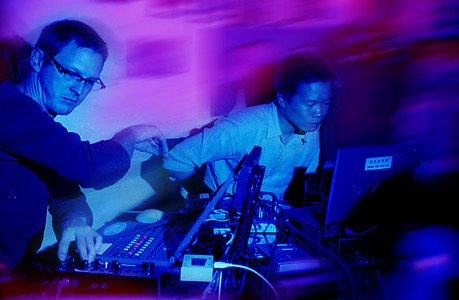
The Buddha Machine” came via USPS yesterday. I’ve messed with it. Had sex with it on. Took a shit with it. And I’m still as confused as you are reading this. From what I understand, an Ambient duo Christiaan Virant and Zhang Jian that go by the name of FM3, came up with a very pretentious idea of releasing their work via a hardware device in an age where people typically use software (cds) or programs (mp3s) to listen to music on.

I know nothing about the artists, the above names were gleaned off of the machine itself, and I can tell you nothing about the songs. The majority of the lettering, including the colorful box it came in, is in Chinese. What “it” is requires you to do is to consider a small plastic box, about the size of a small Walkman. The device has a cheap speaker (monophonic), an earpiece jack, a 4.5V jack, a red light, an on/off/volume control, and a switch that moves left or right. That’s it.
With no instructions and no familiarity with the Chinese language, I was forced to put in two double-A batteries (included) and start playing with it. Once on, the shitty speaker produced an ambient loop that continued….indefinitely. Once I switched the side button, a new loop started. This repeated nine times, until I identified the loops that I liked. From there, you just leave it alone. Seriously.
These aren’t “songs” in the traditional sense and you won’t find yourself singing/humming/whistling along to any of them. As a point of reference, one of the loops sounds like the music in “Close Encounters of the Third Kind,” but less irritating. The last song, which has a loop that’s only about a second and a half, is irritating. I don’t listen to that one much; it sounds like a record skipping.
I suppose I could plug in some headphones and listen to it, but why? The cheap speaker provides additional nuances. I can play it softer for calming backgrounds. I can turn it up (it doesn’t get very loud) higher and make the speaker crackle with the loops. The idea is brilliant: music that has no end and will only stop when the power source runs out. The idea isn’t for everyone. The SLF had no other reaction to the Buddha machine other than the obvious questions:
  • What does it do?
  • Why did they do it?

I suppose I could have gotten heavy with a discussion of Buddhist spirituality, minimalist art and the theories of Brian Eno, but that would only add to the pretentiousness of it. Instead, I suggested that we allow it into the room we get frisky in. An acceptable level was agreed upon and it was set aside. We really didn't notice it during the activity, which was and is the point of "The Buddha Machine." I was instructed to turn it off when we retired, but if I had my way, I would have let the thing play all night.

Friday, March 3, 2006

The Strokes-First Impressions Of Earth


I’ve received 318 e-mails asking me for my thoughts on the new Strokes album, “First Impressions of Earth.” Think of this as my first impression of “First Impressions of Earth,” which actually would mean several impressions as I played the thing a few dozen times in the car, which may lead you to believe that I really like the new Strokes album, which wouldn’t be true at all.
It’s not as bad as you might think, and you need to consider the following before continuing:
1.) I bought The Strokes’ debut single when N.M.E. was shitting all over themselves at these spoiled, prep school rock boys.
2.) I spent additional cash to get the naughty cover copy of “Is This It,” an album which, regardless of your own opinion of this band, will continue to be highly regarded and highly influential, particularly across the pond.
3.) I think “Room On Fire” is a great follow-up, one that only suffers from being released immediately after the Strokes backlash began and from sounding too much like, go figure, a sophomoric album.
So what’s a touted rock band to do when poised to release their third album? You expand it. Fill it out. Polish it up.
It starts out great; “You Only Live Once” contains everything great about the band and builds a blueprint of what they needed to do to remain relevant after more print was spent on what The Strokes wear than what they sound like. For sure: when you start reading more about the parties the band attended than a show, a song, a session, it’s not hard to jump on the nuke the Knack bandwagon.
The second song, “Juicebox,” the album’s divisive first single with a Peter Gunn guitar riff underneath a snotty Julian Casablancas delivery, raised a few eyebrows when, by the time of the chorus, he actually sings. And if you recall, boys and girls, Lou Reed never really sang and we tolerated Tom Verlaine’s voice knowing that he was just setting up for an unbelievable guitar solo.


Saint Julian doesn’t play guitar. But guitarist Albert Hammond and Nic Valensi do, and “First Impressions of Earth” is the first Strokes album in which we see how good they’ve become over the past five years. Example: on side one’s closer “Vision of Division” the guitar solo absolutely shreds, and when the racket finally ends, Casablancas mutters “I’m such a success.” Perfect.
When you reach the end of side one, you start to consider that “First Impressions of Earth” is, in fact, a very good album. The problems start creeping up immediately at the beginning of side two. One of the things that was cool about The Strokes was a common complaint lodged by their detractors: they’re boring. Exactly. That’s the point. Boys in their early twenties in New York City that seem positively bored with their surroundings. Huh? Try spending a weeknight in smalltown Iowa, fellas. Now, particularly with “Ask Me Anything,” they seem not only bored with their surroundings, but bored with the notion that they’re supposed to actually deliver a stellar third album. More than ever: this was supposed to be their comeback album, and side two sounds like they’d rather be at a fucking cocktail party instead of being in the studio. Proof? I swear that Julian said something like “Took a shit/It was fine” in the song “15 minutes.” I’m not sure about this. It sure sounds like he said this. The point is, when you start mumbling about bowel movements, maybe it’s time to consider a career change.
Why haven’t they? Julian seems to answer that on the last song “Red Light” with the line “Do it for the people that’d die for your sake/An entire generation that has nothing to say” which may point to why they finally gave up. Why bother striving to release an intentionally excellent album to a fickle Generation Y who’ve already moved on to another next big thing and who will just download your shit for free anyway? The point is, gentlemen, because you’ve got to give us a reason to buy your shit. It seems that everyone but Julian on this album understands that rock music is their fucking job, and while his cynicism is kind of precocious in small doses, over the course of an entire album side, he turns into the guy at work that nobody likes to socialize with because he’s always got a chip on his shoulder. Lighten up, buddy. There’s a lot of us who still dream about fucking models while RCA picks up the bar tab for the entire evening. The frustrating thing is how, if he would have invested just a little more focus on “First Impressions of Earth” the band would have delivered what was expected of them on their third offering.

Monday, February 13, 2006

Low-Live Review

Chan Marshall cancelled her latest tour because she went crazy again, so what’s a guy to do but go see a show fronted by another looney bin. Alan Sparhawk, vocalist/guitarist/writist of the Duluth, Minnesota band Low, released the band’s most accessible album last year and then went crazy immediately before they embarked on an American tour. Now, not only does this mean that your label (and your band) are set to lose thousands of dollars in sales resulting from your craziness, but it also means that people are going to look at you in that “Will he flip out?” stare. So a tidy number of us set out to see a real live trainwreck in a funny little bar/restaurant that served a mediocre grilled cheese sandwich.


Late last month, Sparhawk did a nutty little interview with Pitchfork, which eloquently repeated his “Here’s how crazy I got:” story, along with a bizarre Mormon + Pot = bass player leaving story. Like a hockey crowd looking for a fight on the ice, there were lots of us there that understood a minor meltdown may be afoot if the crazy stars aligned themselves just right.

Sidenote
I’m so fucking angry at myself that I spelled “there” in the last sentence as “their” and spellcheck caught it before me. Stupid Stupid Stupid. I feel like such a retard right now.
End Sidenote


Having seen Low before several years ago, I knew that drinking a lot of High Life may create a sleep coma when mixed with Low’s “slowcore” tempos. But Sparhawk has wisely implemented some expansion efforts in his material as their music developed a bigger arrangement on the past three albums. Fine, then. I’ll stop at three High Lifes.
The polite audience sat down, hippie style, in front of the stage. Luckily, our seats were positioned directly off stage left, with new bassist Matt Livingston’s scrawny ass just four feet away from my face. A few things about Matt Livingston:
1.) He’s got a very scrawny little ass
2.) He needs to pull up his pants
3.) The elastic band on his boxers is showing
It was a very informal performance, with stripped down renditions of their last three albums taking up the majority of the set list. One song was aborted momentarily, after Sparhawk realized mid-verse that they’d begun in a higher key than he could sing in. Livingston and Mimi Parker kept going while Alan lowered the strings after asking permission from his invisible friend, Dr. Minnetonka. He then pulled out an apricot and yelled “Stop looking at me!” at the audience.
Alan then tried to kill himself by adjusting the stage lights in front of him despite being electrocuted doing the same thing once before.
His wife, Mimi Parker, occasionally ribbed him by telling him that he had “too many gadgets” for his guitar and other hurtful comments. Alan started weeping uncontrollably until a roadie came up and offered a huge joint that would take him directly to his “happy place.”
Mimi’s kit remains as primitive as ever, and Alan spent the majority of the night behind an acoustic guitar (with a bunch of guitar-effect pedals) carefully channeling an almost morbid muse. The other thing that remains with her presence is the unbelievable harmonies she adds. This is critical. With Low, things move at a snails pace, requiring listeners to be attentive to every detail. Mimi’s voice adds a very ethereal element to a very dirge-like rhythm. It’s clear that Low wouldn’t have been able to sustain an over decade long history without her contribution.

A girl that looked an awful lot like Harry Potter yelled out “Sunflower” when they came back for an encore. They started playing it (most awesomely, I might add) and then the Harry Potter girl scream “Yes!”, clapped her hands together and then pissed her pants
The “hit” “When I Go Deaf” ended the three song encore in a swell of feedbacks until Alan finally declared “I think we’re done now.”
Three other interesting things about new bass player Matt Livingston:
1.) His second touring bass is one of those Steinberger ones
2.) He wears glasses
3.) He’s a pretty nice guy
“When they finally found your body/Giant x’s on your eyes” starts the uplifting “Sunflower.” I suppose I’m a little grateful that they didn’t find Alan at the end of a noose. I’m glad he’s apparently gotten his shit just a little bit together. And, considering how his child with Mimi is probably ready for kindergarten and how touring may not be a viable option soon, I’m glad I took a night off see Low on their “Crazy From The Weed” tour.
Setlist:
Dragonfly
Monkey
Sandanista
In The Drugs
California
Amazing Grace
Condescend
Pissing
Violent Past
Lazy
Murder
Encore
Over The Ocean
Sunflower
When I Go Deaf

Thursday, February 2, 2006

Bruce Springsteen-Born To Run The 30th Anniversary Edition

An admirable man, Henry Rollins, once said “You got ‘my-bossman’s-a-motherfucker-and-I-want-to-cut-his-balls-off-and-shove-them-right-down-his-throat’ blues!” and he was right. The boss is a micromanaging fucktard and he has been the subject of my ire for the past few weeks. The motherfucker is nickel-and-diming me with my bonus payout and when you fuck with the cashflow….Well it’s whatever the guitarist from the Dwarves said to the verbally abusing audience member back in ’96 after the lead singer smacked the aforementioned verbal abuser in the face with his microphone, Rodger Daltry style.
But this story ain’t about my boss. It’s about our boss. The one from Jersey. That dude who you’d, for whatever reason, like to be able to “pfft” but can’t because, well, he writes such fucking good songs.
For me, that “pfft” would come around the time that “Lucky Town,” or whatever the fuck it was called, came out. Then again, I actually went to a Springsteen show during the “Lucky Town” tour and the thing fucking rocked. This guy managed to completely destroy, for the better part of three hours no less, and he did it without the help of The E Street Band. Bruce Springsteen, if you haven’t heard, puts on some righteous live concerts, and no true rock fan should die without attending one. Period.
I couldn’t tell you one member of his band from that tour/album. The only thing I can tell you is that when you go to work for The Boss, he expects you to be proficient at your instrument and be willing to work overtime.
Apparently, his live abilities aren’t an isolated event; Springsteen has consistently owned live shows for his entire career. The first concert I saw with him included the E Street Band and it too ranks high as one of the best shows I’ve ever been to. And that second show without the E Streeters would destroy over 75% of the rest of the shows I’ve seen.


Springsteen released the 30th Anniversary edition of the album that propelled him into superduperstar status: “Born To Run.” I’ve got to confess to not owning a single Springsteen disc (I only have vinyl copies) so I didn’t have the feeling that I was getting fucked in the ass when Columbia re-issued it with a cleaned up sound quality and bonus material. The bonus material is actually two DVDs: one of the making/back-story of the “Born To Run” album and a live DVD from Bruce’s first U.K. appearance that coincided with the release of the album. No bonus tracks are included with the package, which is actually a nice twist-Springsteen and the packagers force you to consider the album in the same context as its initial release. The difference being the bonus material that is included allows the fan to act as a fly on the wall for this album, from start to finish. The only thing that isn’t included is the impact it had on Springsteen himself. From this point on, he became a high profile artist for Columbia and for rock itself. In my opinion, when you consider the body of work that Bruce has taken since this release, he’s handled himself remarkably well and remarkably consistent. I’m hard pressed to find a period of his work that would be considered “a low point.” Bruce’s early 90’s work was mediocre, but I wouldn’t consider it embarrassing. If anything, it prompted a special edition version of “Born To Run” because you tend to forget the reasons why an artist becomes universally revered. And this special edition reminds us that the reason why we revered him.
The first reason is because “Born To Run” is an essential album. Masterfully written and impeccably executed, the music transcends time and the quality of it remains as relevant today as it was in 1975. Which got me thinking about how it was actually received in 1975. My guess is that, because it is musically flawless, it may have been looked as a polished effort, sonically enhanced by producers intending to make a big sounding record. The thing is, “Born To Run” the song is a big song to begin with; it may be the reason why there are no demo versions, alternate takes, or early mixes of the song. They show the progression of the song, how it achieves that Spectoresque-sound, but this is part of the video extras.
The other thing I noticed from the presentation of the album is how expertly it was sequenced. I’ve long felt that album sequencing has become a lost art during the CD era; here is a perfect example of how sequencing can influence the impact of an album. Firstly, the album has a bare-bones number of songs: 8 tracks. But every one of those tracks is critical to the story “Born To Run” provides us. Today, and ironically Springsteen is guilty of this too, albums are filled with tracks that merely add to the total time. Case in point: Springsteen could have made a really good record in 1992 if someone with some balls had combined the entire “Lucky Town” and “Human Touch” albums and brought it down to only ten cuts.
“Born To Run” knows that if you’re going to make an epic album, every cut counts. Every cut does: from the Broadway-via-Jersey opener “Thunder Road” all the way to the closer “Jungleland.” Springsteen was forced into a make-it-or-break-it scenario and he throws it down. “Show a little faith/there’s music in the night” he barks in “Thunder Road,” and with an image like that he masterfully throws down an everyman line “You ain’t a beauty/but hey, you’re alright.” And that’s a perfect example of why he’s on the same playing field as a Dylan, Davies, or Townshend; the notion that a smart blue-collar bloke can get out of their cul-de-sac using words can inspire even the not too literal.


The live DVD shows Bruce and his updated E-Street Band finally arriving over the pond to bring this very American sound to the country’s forefathers. The performance is just as theatric as the album, with the E-Street Band perfectly executing the current crop of titles with those that made a name for them in New England. The audience remains intently focused on him, perhaps asking how such a bloke could evoke the same amount of sheer drama as a Ziggy who needed platforms to demonstrate his own larger than life sound.
“She’s The One” begins as a harp train traveling through Bo Diddly territory before arriving at the familiar album rave up. Springsteen crawls in, around, and over the stage, playing the spotlight like a master. But the real masters are the band themselves, who with every song, throw down a good shift and let the boss take credit for how good the performance is. Seriously, the fact that cameras were able to catch this performance is a blessing. Just as he knew he had to make “the” album with “Born To Run,” Springsteen understood that he would have to provide this English audience with “the” performance to justify the hype that arrived on their shores before they even played a note.
They deliver. It’s a spectacular performance and one, I’m sure, few in the audience forgot about. And a performance that we now can witness to have a solid frame of reference of why the boss deserves our respect.